

How to Connect Irelia.ai to Go High Level Using Webhooks: A Step-by-Step Guide
Table of Contents
- 📋 What You’ll Need — Prerequisites before starting
- 🎯 Common Use Cases — Start Here, find your own use case
- ⚡ Quick Path — Condensed steps for experienced users
- 🔧 Step-by-Step Setup — Complete walkthrough (Steps 1-7)
- 🛠️ Troubleshooting — Common issues & fixes
- ✅ Quick Checklist — Verify your setup is complete
- 🚀 Advanced Automations — Conditions, multi-step & real-world examples
Introduction
You’ve built your conversational AI agent on Irelia.ai, and it’s actively chatting with prospects on WhatsApp, Facebook, and Instagram. But what happens when something important occurs—like when a lead gets qualified, when your bot collects key information, or when someone books a meeting? Right now, you might be manually checking your Irelia dashboard and copying information to your Go High Level CRM. There’s a better way. This guide shows you how to automatically send information from Irelia to your Go High Level account the instant something important happens—no manual work, no delays, no checking dashboards. By the end of this guide, you’ll have: ✅ A working automation that triggers when specific events happen in your Irelia conversations✅ Data flowing automatically from Irelia to your GHL CRM, pipelines, or other connected tools
✅ The knowledge to build unlimited additional automations
What You’ll Need
- An Irelia.ai account with at least one active agent
- A Go High Level account with access to Workflows — Sign up here if needed
- A destination for your data (GHL CRM, Google Sheets, or Slack)
🎯 Common Use Cases — Start Here (#🎯-common-use-cases-—-start-here)
80% of readers need one of these two setups. Find yours, note the guidance, then follow the Step-by-Step Setup below — you’ll just make different selections at Step 2 and Step 4.- Use Case 1: Lead Qualified / Goal Completed
- Use Case 2: Push Collected Data
Update my GHL CRM when a lead qualifies or a goal is completed
Examples: lead marked as qualified → update contact tags and pipeline stage · meeting booked → move opportunity forward · goal completed → notify sales team📡 Select this event in Step 2:Lead Qualified or Goal AchievedWhich steps do I follow?- Updating contact fields & tags only? → Follow Steps 1–6 as written (use Example A in Step 4 — GHL auto-updates the existing contact).
- Updating a pipeline or opportunity? → Follow Steps 1–3, then jump to “Search & Update Existing Records” for your Step 4.
Don’t see your use case? No problem — review the full events table and follow the guide using “New Inbound Contact” as your learning event. The process is identical for every event; only your selections at Step 2 and Step 4 change.
Quick Path (Experienced Users)
Quick Path (Experienced Users)
Already comfortable with Go High Level Workflows? Here’s the condensed version:
- GHL: Automation → Workflows → Create Workflow → Add Trigger: “Inbound Webhook” → Copy webhook URL
- Irelia: Settings → Select Agent → Events and Notifications → Paste URL into desired event field
- Test: Click “Test” button in Irelia → Return to GHL → Verify data received
- Action: Add your action (Update Contact, Add to Pipeline, etc.) → Map fields → Test → Publish
Quick Overview: What You’ll Do
Total: ~15-20 minutes
How This Works
Think of this connection like a smart doorbell system:| Doorbell System | Your Automation |
|---|---|
| 🏠 Something happens at your door (doorbell rings, package arrives) | Your AI agent has an important moment (lead qualified, goal achieved, data collected) |
| 📹 Doorbell camera captures it and sends info | Irelia’s webhook packages the details (who, what, when) |
| 📱 Your phone receives the notification | Go High Level receives the data instantly |
| ⚡ Automatic action triggers (save video, alert family) | Your GHL workflow does its thing (update CRM, move pipeline stage, send notification) |
What Events Can Irelia Notify You About?
As your AI agent chats with prospects, Irelia tracks important milestones called events—the “moments that matter” in your conversations. Below you can find a few examples of Irelia events:| Event | What It Means | Example Use |
|---|---|---|
| 💬 New Inbound Contact | Someone messages you first | → Create contact in GHL CRM |
| 🎯 Lead Qualified | Prospect meets your criteria | → Move to qualified pipeline stage |
| ❌ Lead Disqualified | Prospect doesn’t fit | → Add to nurture campaign |
| ✅ Goal Achieved | Prospect completed an objective | → Update opportunity status |
| 📝 Data Gathered | Bot collected specific information | → Update custom fields in CRM |
| ❓ Question Lacking Answer | Prospect asked something bot couldn’t answer | → Create task for team |
Step 1: Set Up Go High Level to Receive Irelia Notifications (#step-1:-set-up-go-high-level-to-receive-irelia-notifications)
Time needed: 3 minutes In this step, you’ll create a new workflow in Go High Level and configure it to listen for events from Irelia.Navigate to Workflows
- Log into your Go High Level account
- Select your sub-account (if applicable)
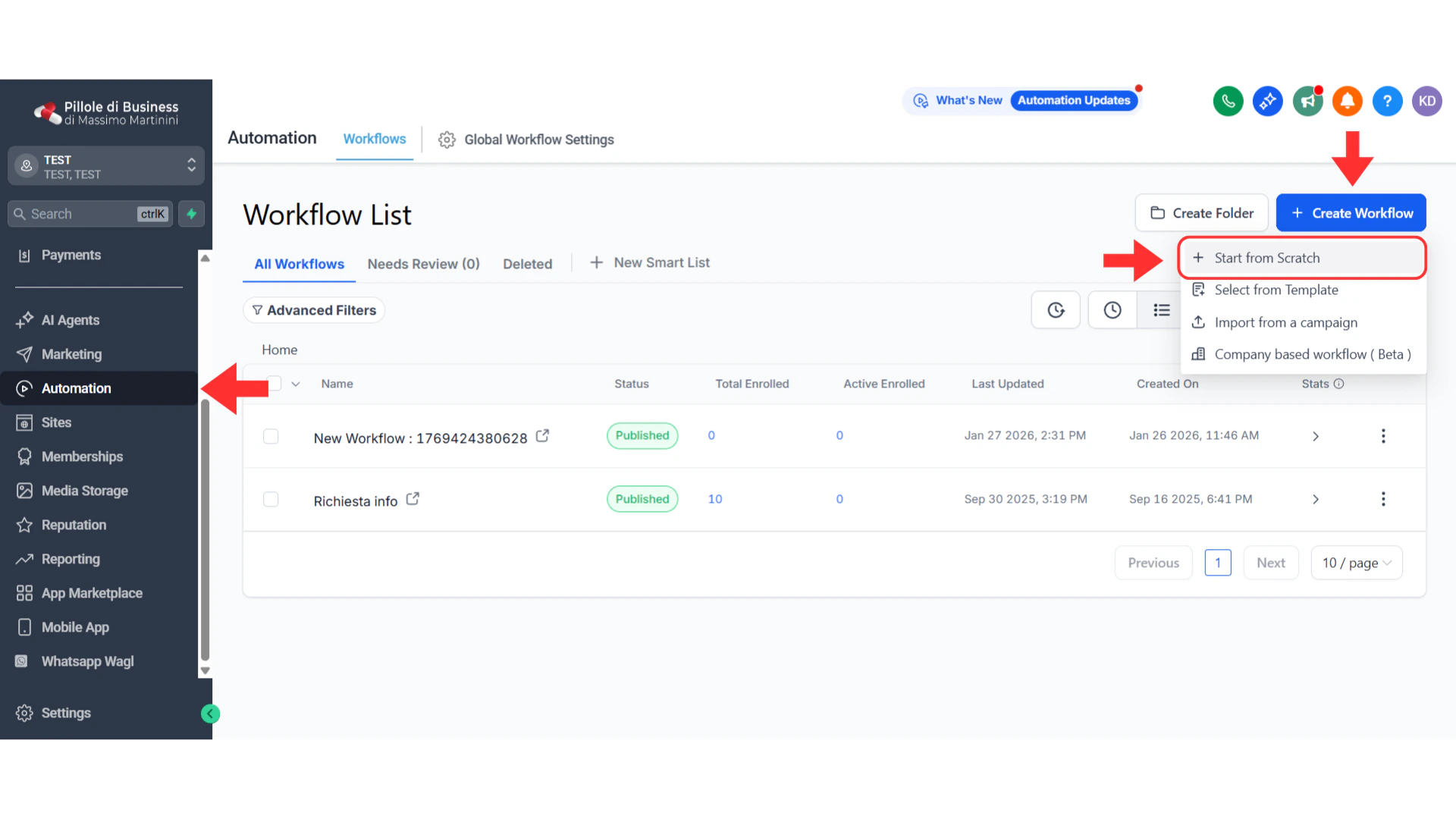
- Click “Automation” in the left sidebar
- Click “Workflows”
Create Your Workflow
- Click the “Create Workflow” button (top right)
- Select “Start from Scratch” (or choose a blank template)
Add the Webhook Trigger
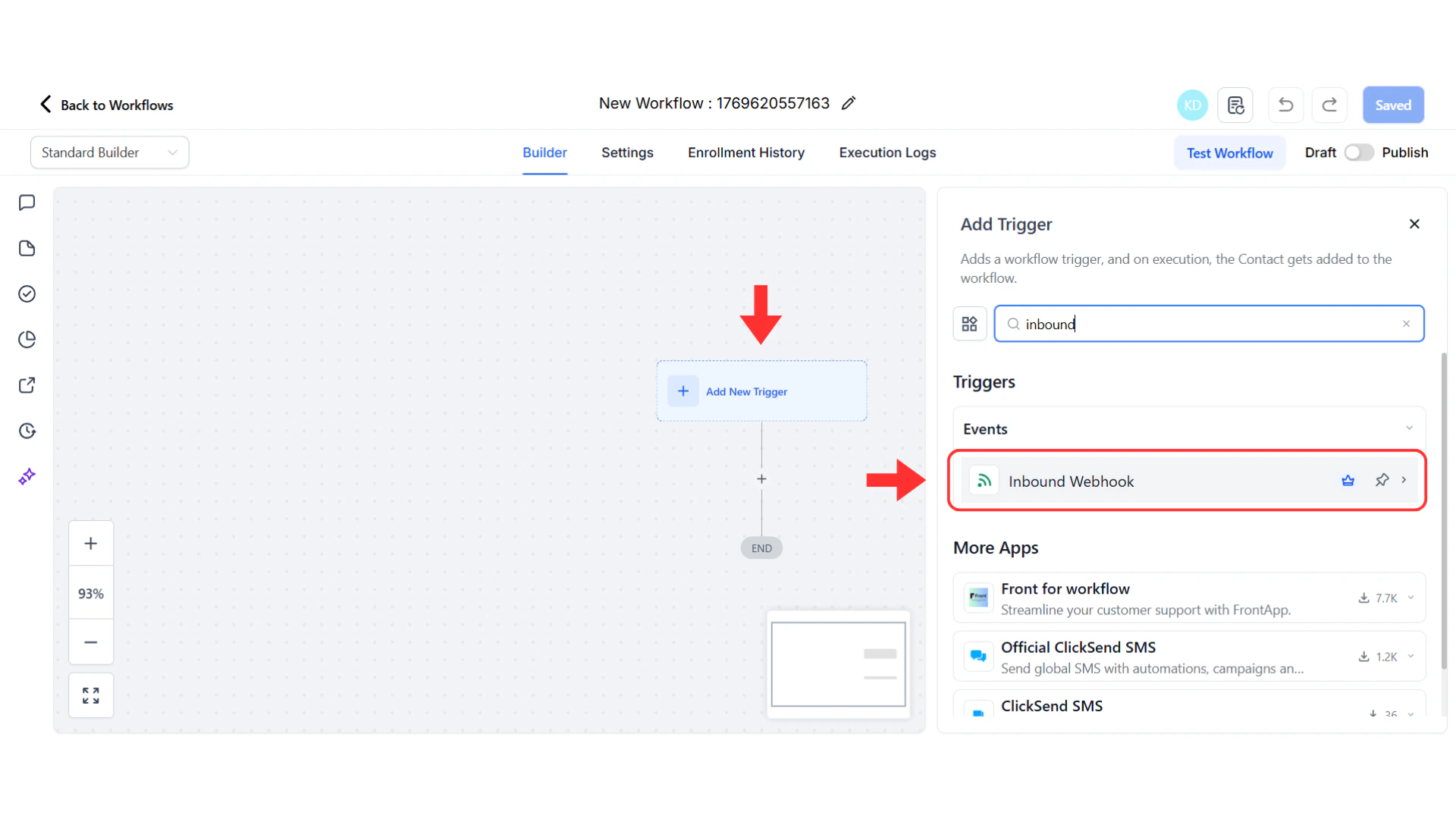
- You’ll see the workflow builder with an “Add New Trigger” prompt
- Click “Add New Trigger”
- In the trigger search box, type “webhook”
- Select “Inbound Webhook”
Get Your Webhook URL
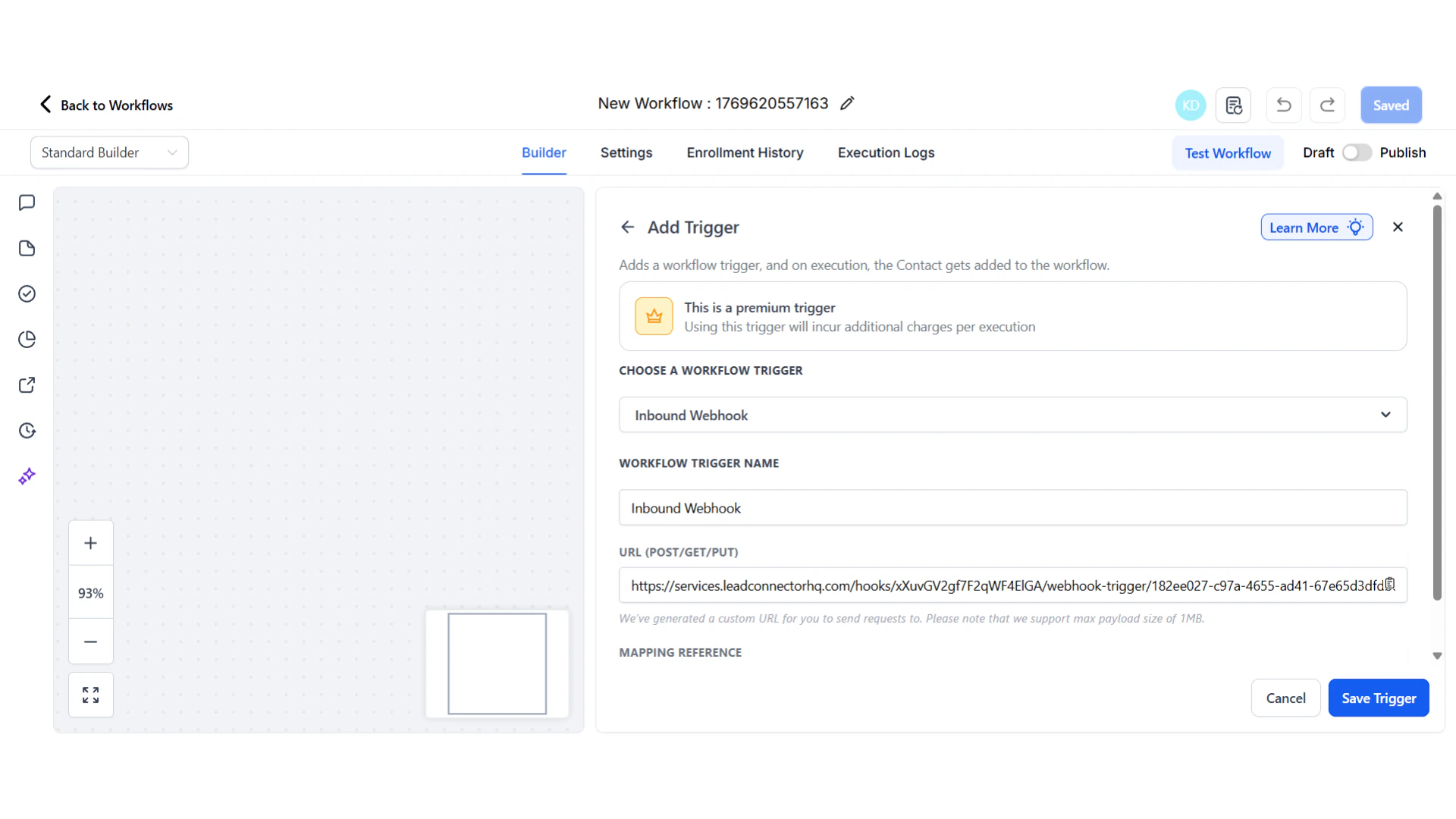
This is the most important part—you’re getting a unique URL that tells Irelia exactly where to send information.- After selecting Inbound Webhook, GHL will display a Webhook URL
- It looks like:
https://services.leadconnectorhq.com/hooks/...
- It looks like:
- Click the “Copy” icon next to the URL
Keep this Go High Level tab open (exactly how you see it in the image below)! You’ll need to return here in a few minutes.
Step 2: Tell Irelia Where to Send Notifications
Time needed: 2 minutes Now you’ll log into Irelia and paste the webhook URL you just copied. Remember: your Go High Level webhook panel should still be open in another tab.Quick Context: Agents and Events
In Irelia, each AI agent can have its own automations. For this guide, you’ll configure ONE event for ONE agent. Once you understand how it works, you can easily set up more.Access Your Agent Settings
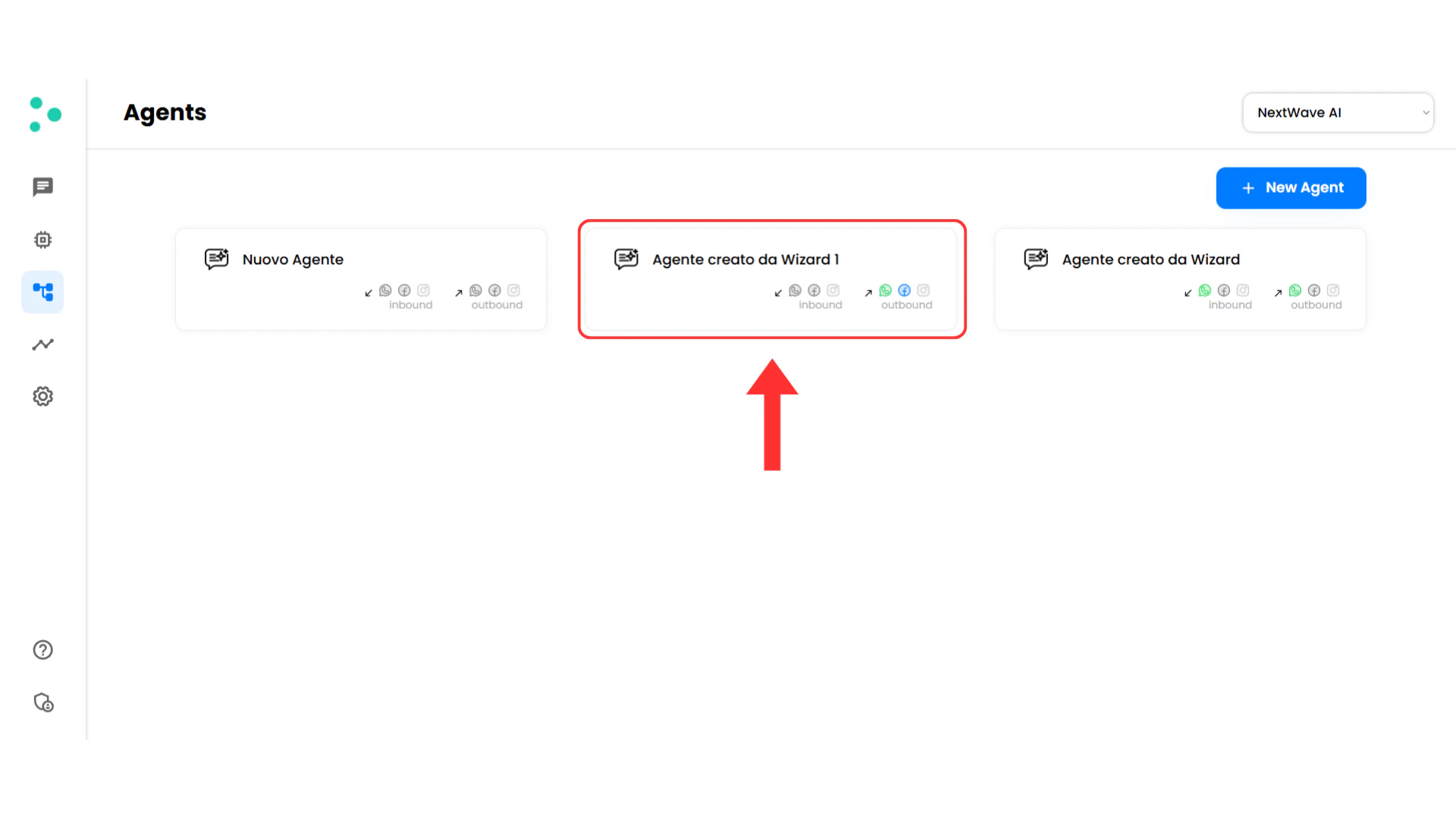
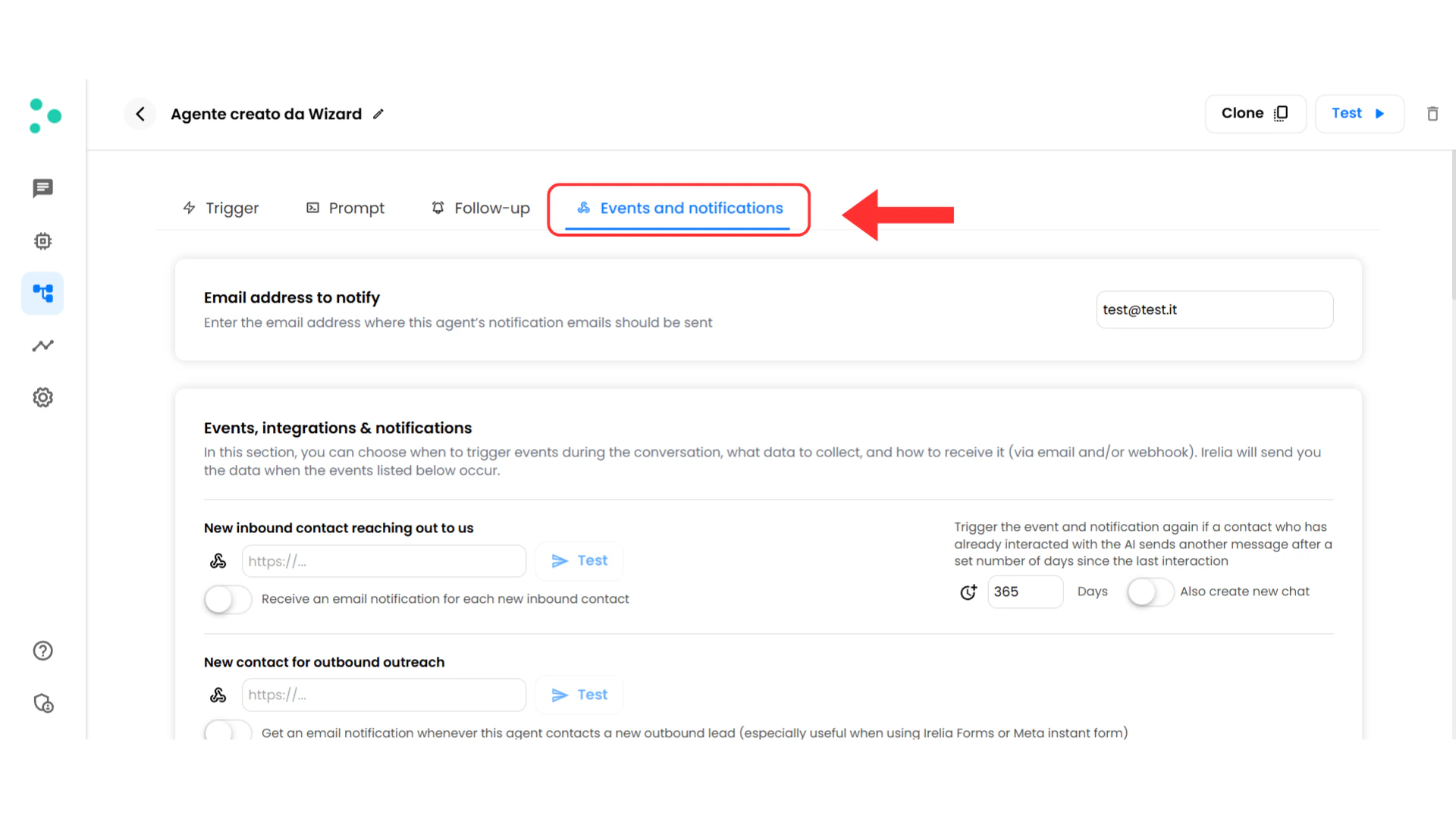
- Log into your Irelia.ai settings dashboard
- Select the agent you want to connect to Go High Level
- Navigate to “Events and Notifications”
Configure Your Webhook
- You’ll see a list of available events
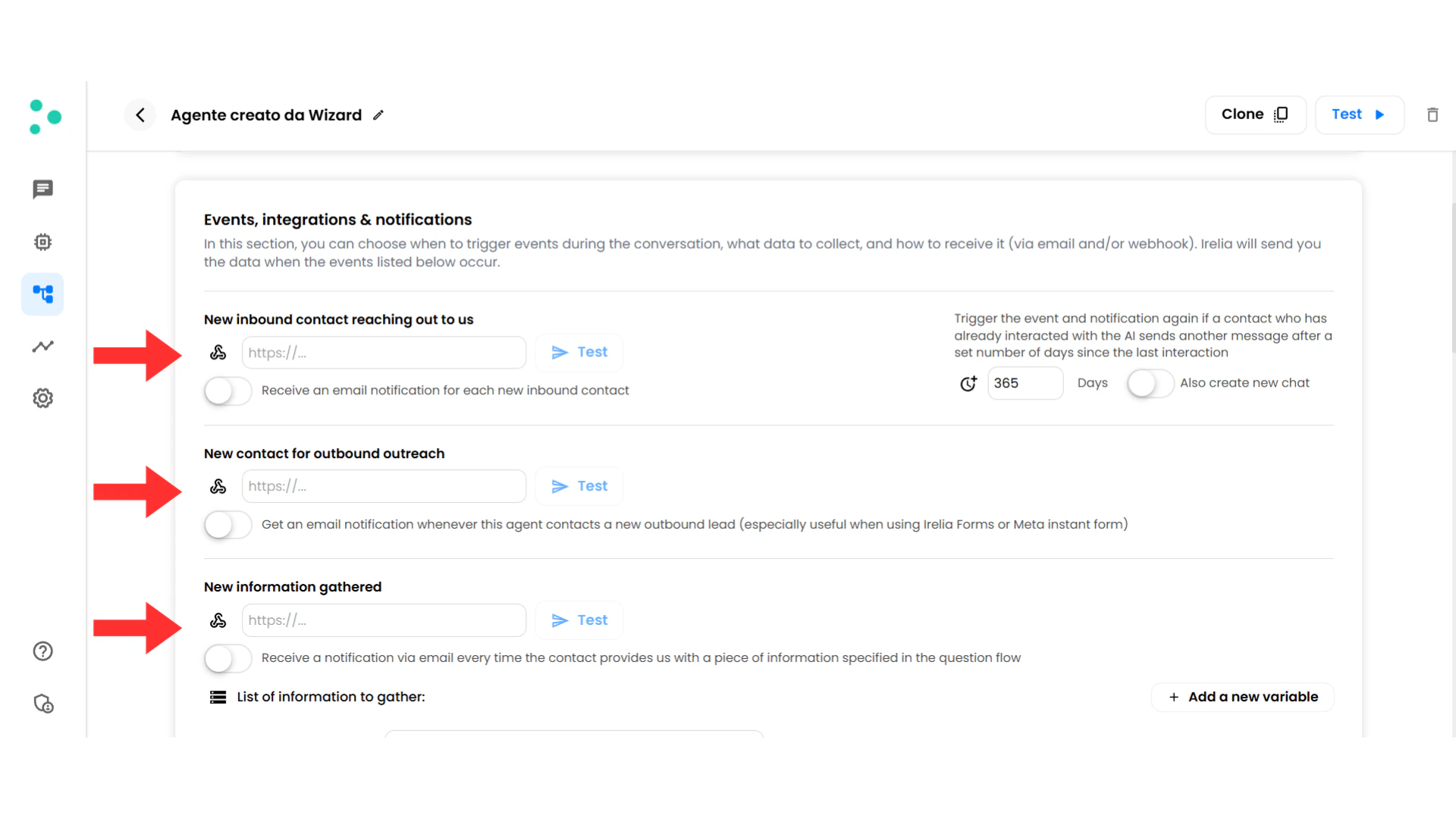
- Find “New inbound contact reaching out to us” or the event you wish to configure in the list
- Click in the URL field next to this event
- Paste the webhook URL you copied from Go High Level (The URL will auto-save)
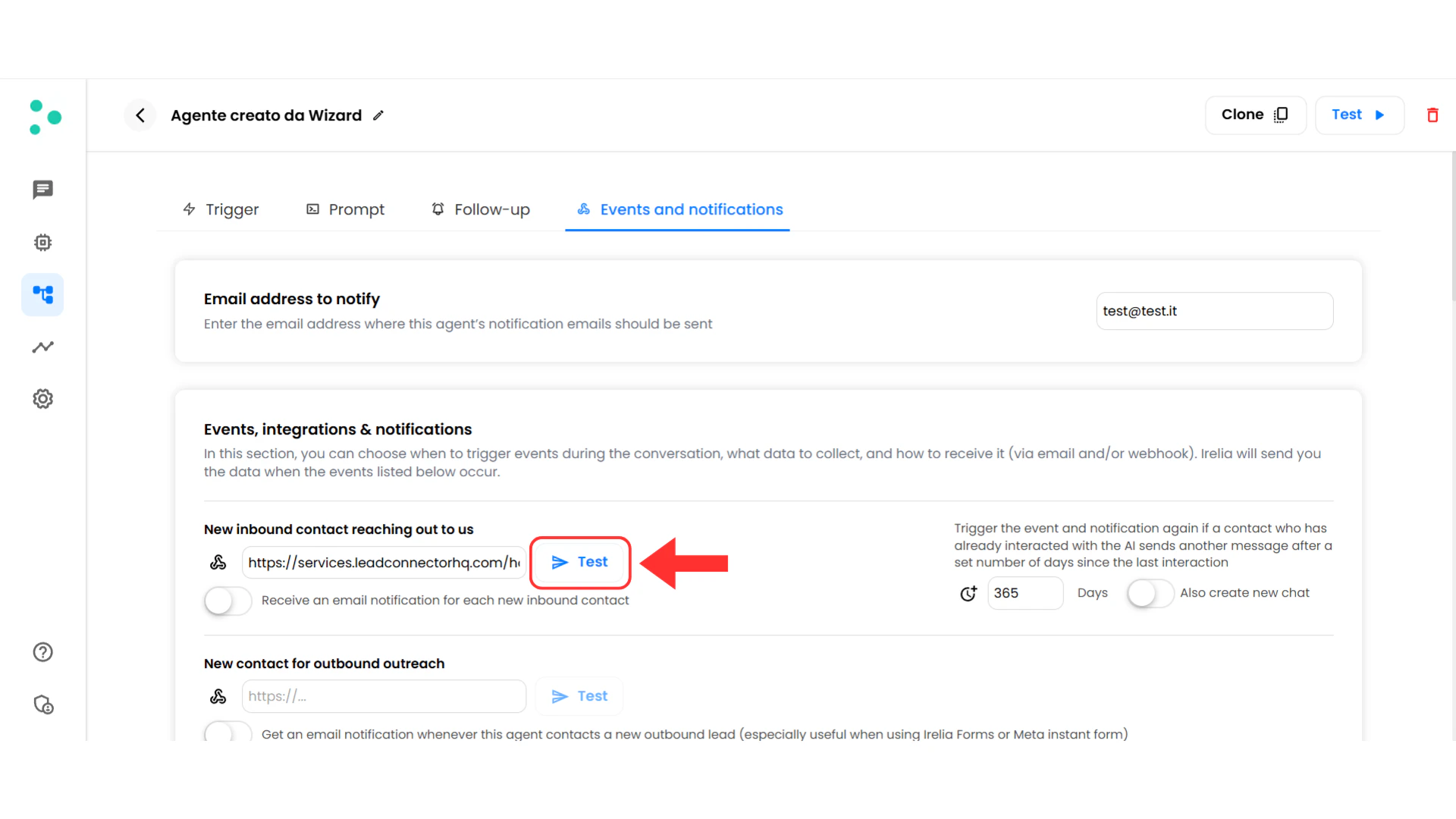
URL Connected! Now let’s send test data so Go High Level knows what information to expect.
Step 3: Test the Connection and Complete GHL Setup
Time needed: 2 minutes Now let’s send test data from Irelia and configure Go High Level to recognize the data structure. This step is crucial—GHL needs to receive sample data before you can save and use the webhook trigger.Send Test Data from Irelia
- In your Irelia webhook configuration (where you just pasted the URL)
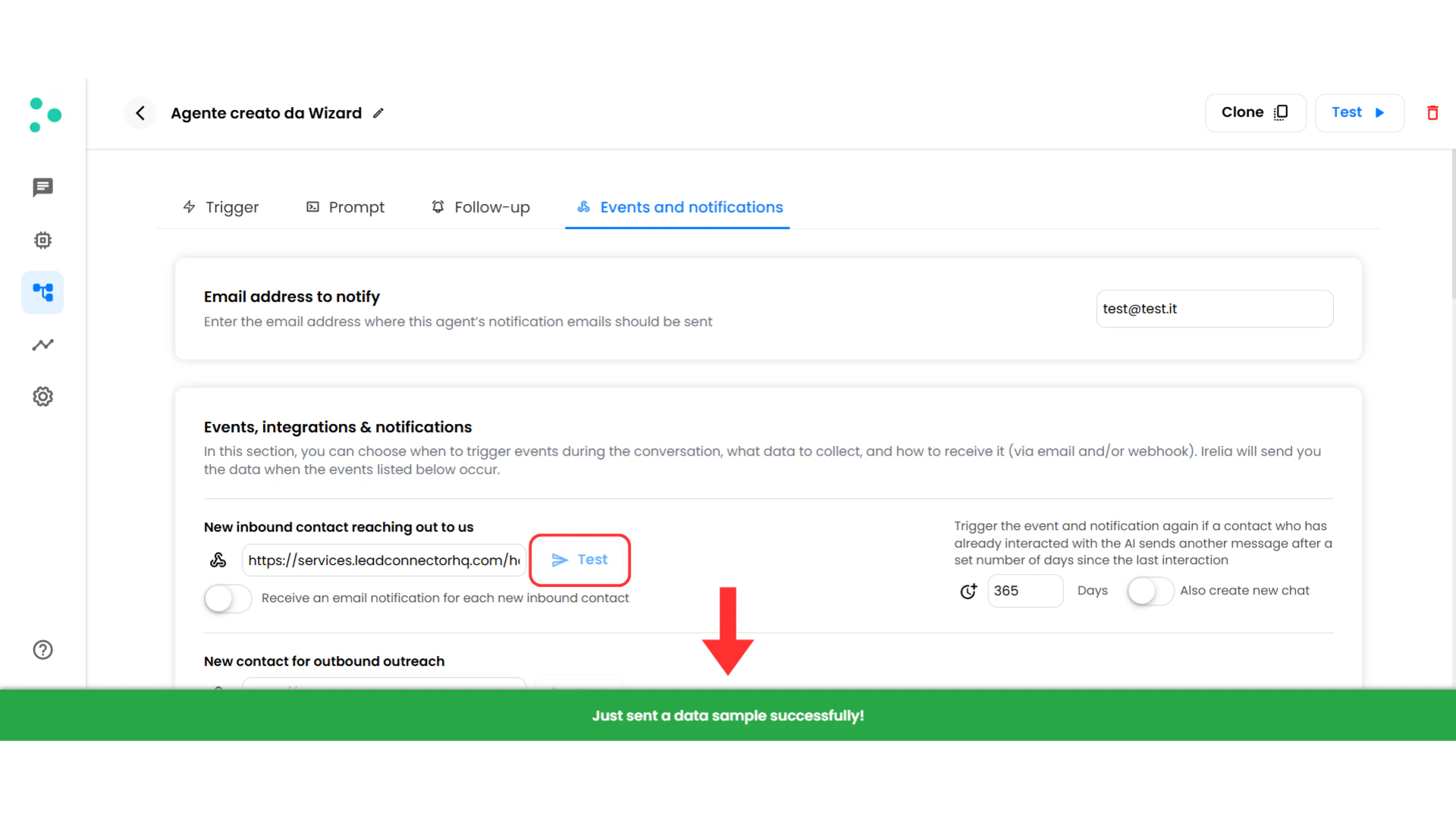
- Find the blue “Test” button next to the webhook URL field
- Click “Test”
- You should see a green success indicator in Irelia that says “Just sent a data sample successfully”
Fetch and Select the Sample Data in Go High Level
- Go back to your Go High Level tab (the webhook configuration panel you left open)
- Click the “Fetch Sample Requests” button
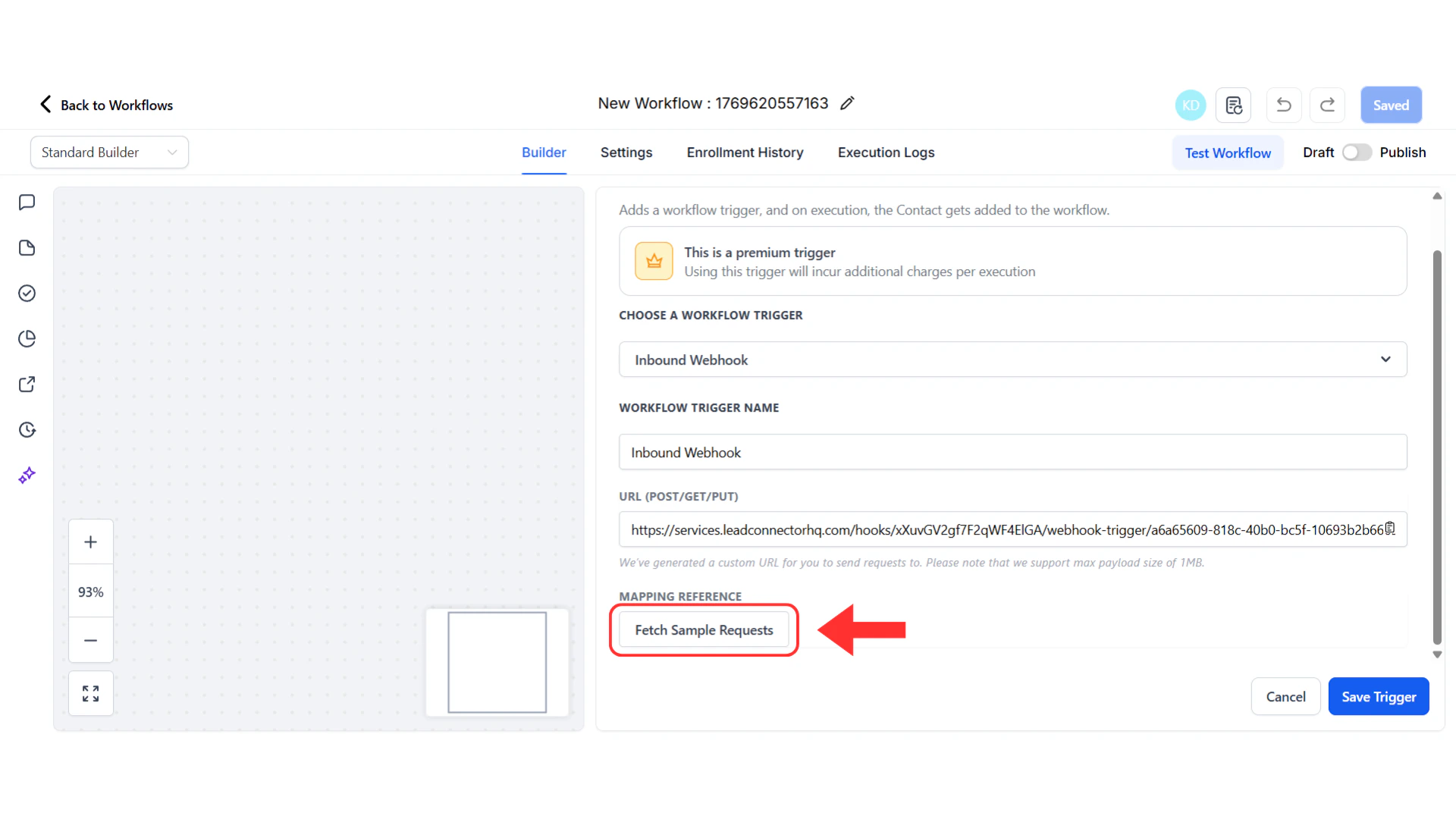
- GHL will retrieve the test data you just sent from Irelia
- You’ll see a list of incoming payloads — select the payload you just received (it should be the most recent one)
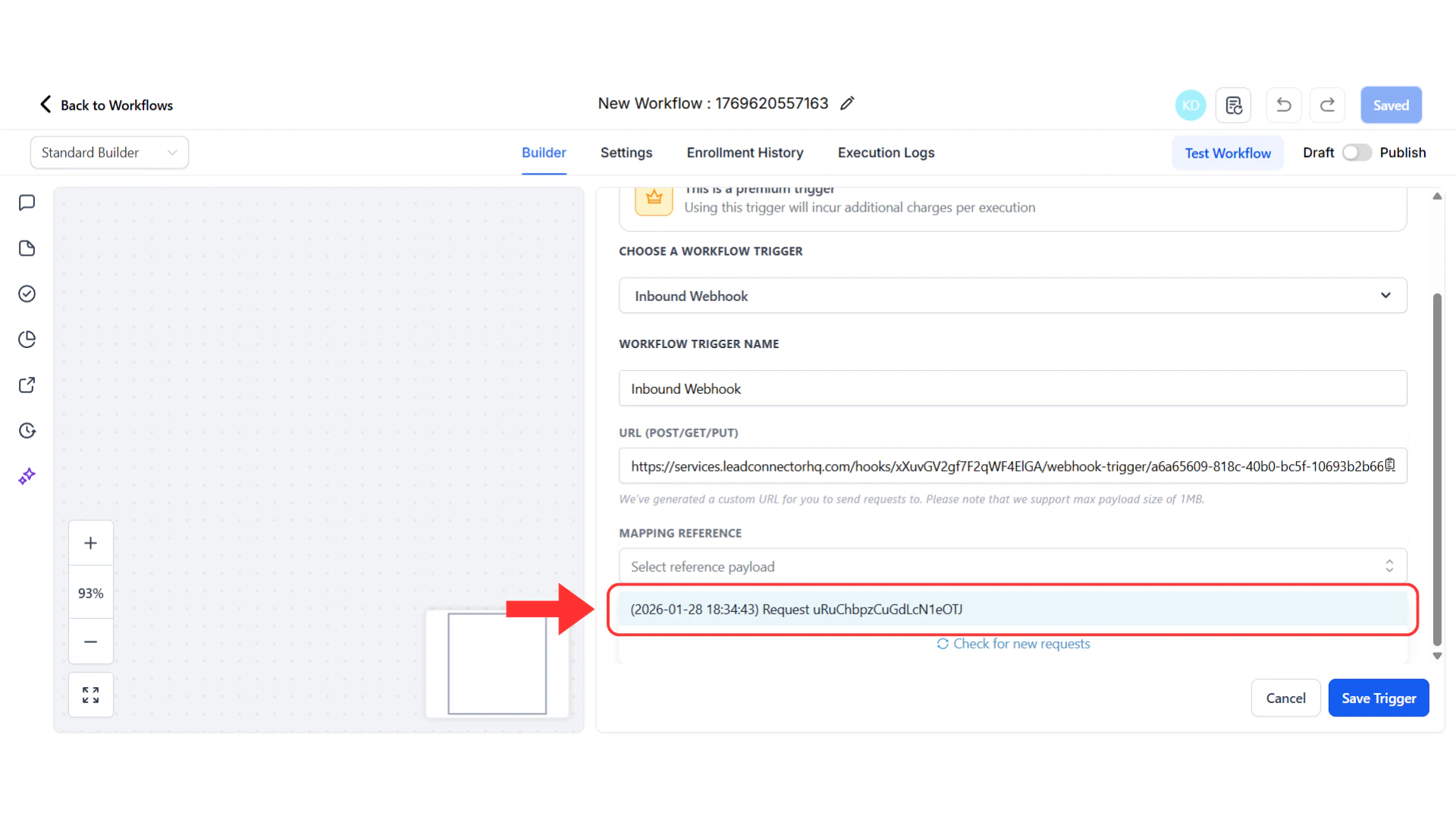
- GHL will now display all the data fields it received from Irelia
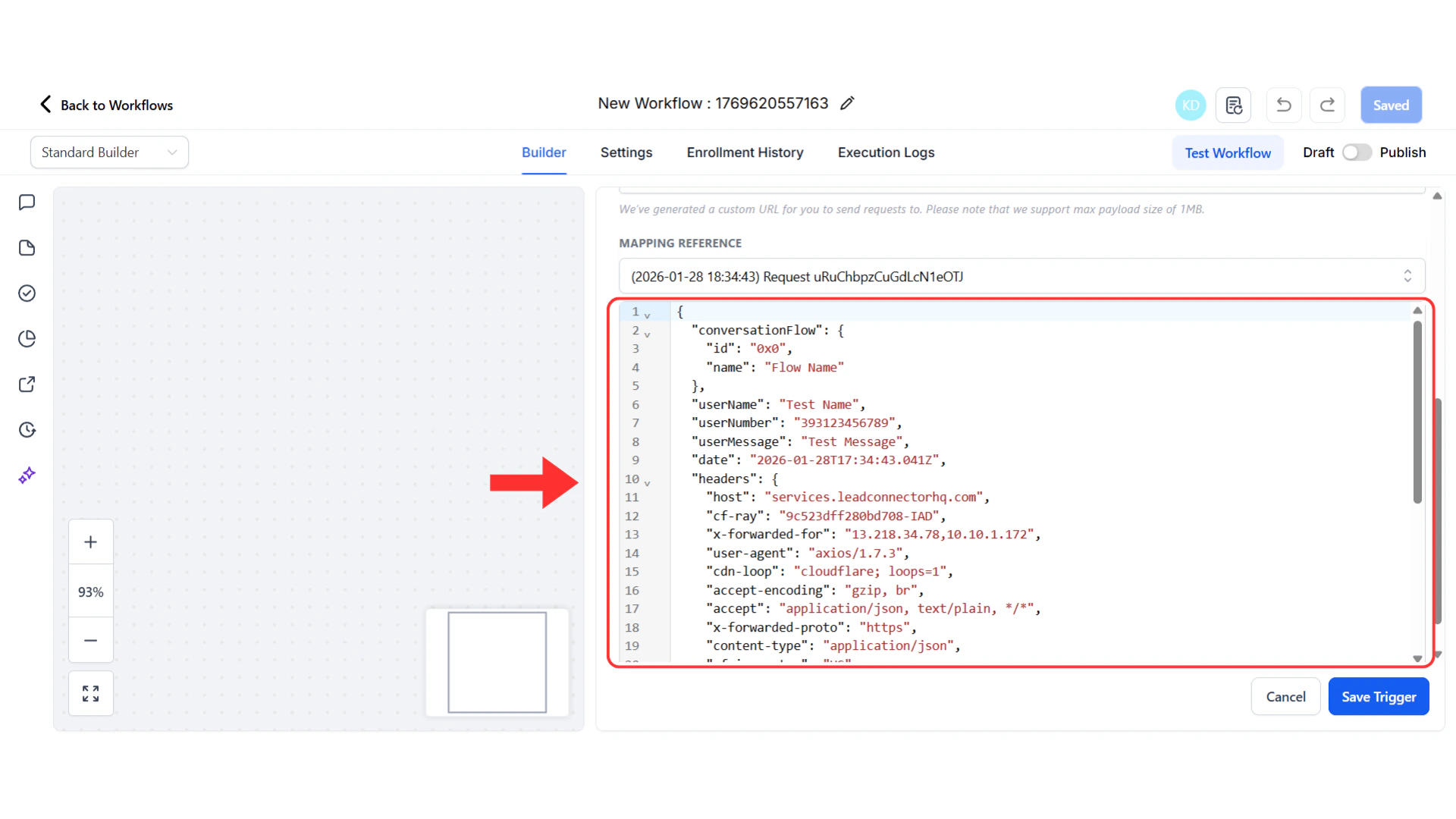
- Click “Save Trigger” to complete the webhook setup
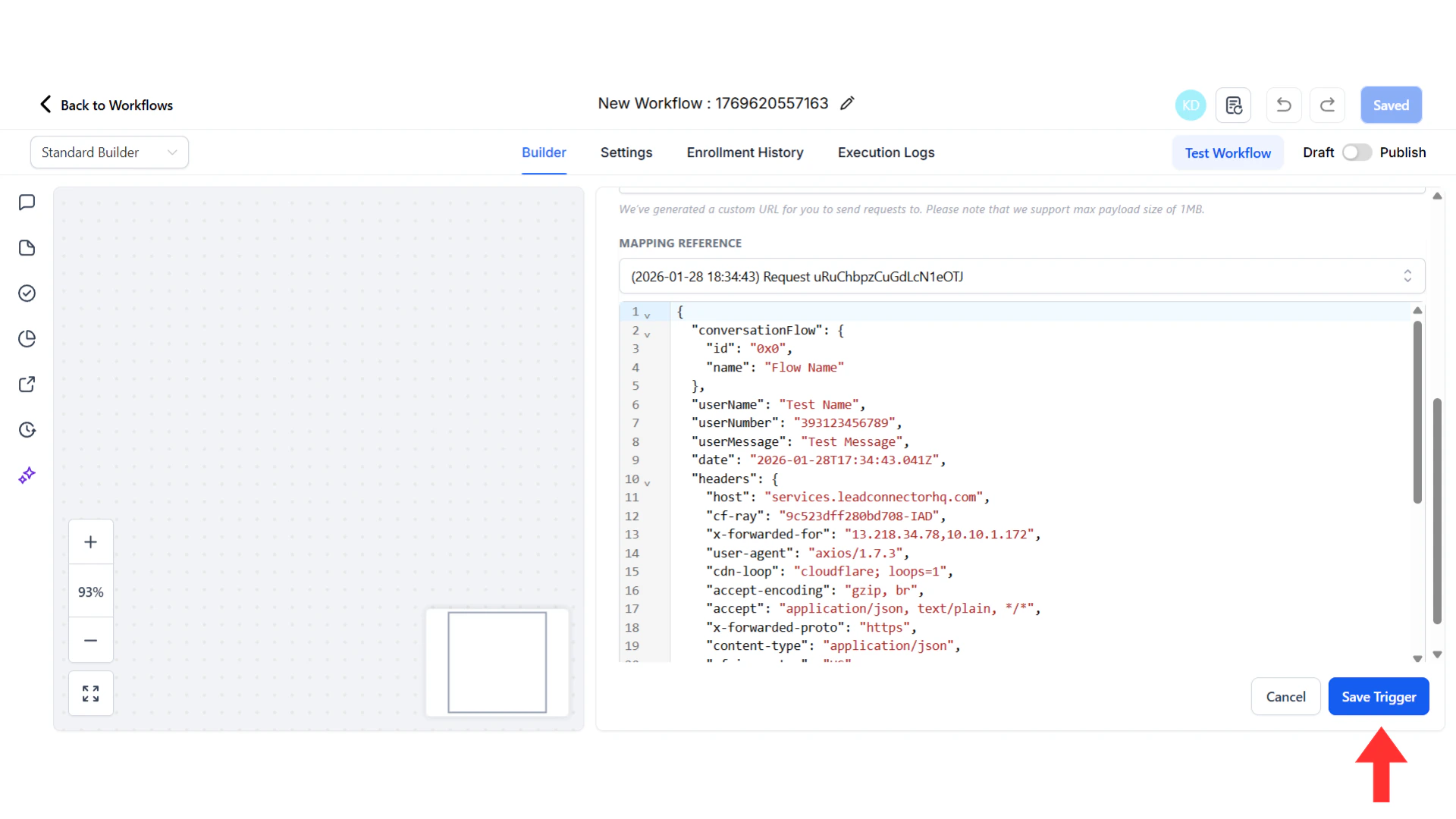
Success! Irelia and Go High Level are connected and talking to each other. GHL now knows exactly what data to expect from Irelia.
Understanding What Irelia Sends You
Before setting up actions, let’s take 60 seconds to understand what Irelia just sent to Go High Level.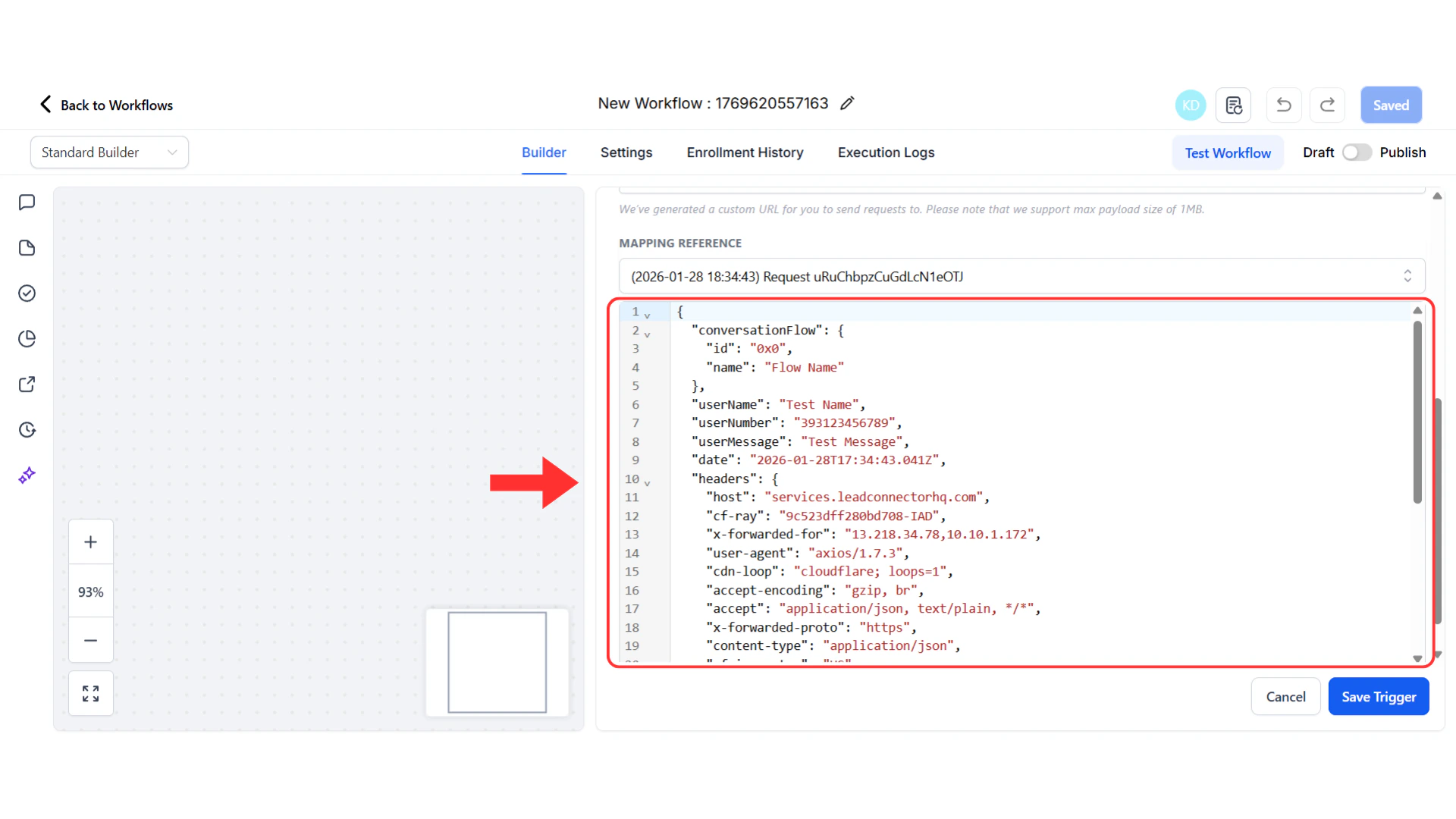
👤 Who They Are (Contact Info)
👤 Who They Are (Contact Info)
userName- The prospect’s nameuserNumber- Their phone numberinboundLead- Did they message first (true) or did you (false)?
💬 What Happened (Conversation Details)
💬 What Happened (Conversation Details)
Per Agent, the specific chat the user had with a specific agent (under the “conversationFlow” section):
id- Unique agent identifiername- Name of the conversation agentchatHistory- Complete conversation transcript with this agentleadQualification- Are they qualified by this agent? (“fit”, “not a fit”, or “TBD”)interestScore- How interested are they in this conversation? (0.0 to 1.0, like 0% to 100%)reasonNotQualified- Why they didn’t qualify (if applicable)goalAchieved- Number of goals completed with this agentnumberOfMessageSent- Messages sent by this agentnumberOfMessageReceived- Messages received from prospectnumberOfQuestionLackingData- Questions the AI couldn’t answer from knowledge basecreditConsumedForThisChat- Credits used for this conversation
chatHistory- Complete chat history across all agentsoptStatus- Opt-in status (e.g., “in”, “out”)creditConsumedForThisLead- Total credits consumednumberOfMessageSent- Total messages sentnumberOfMessageReceived- Total messages receivednumberOfQuestionLackingData- Total questions lacking answersnumberOfGoalAchieved- Total goals achieved
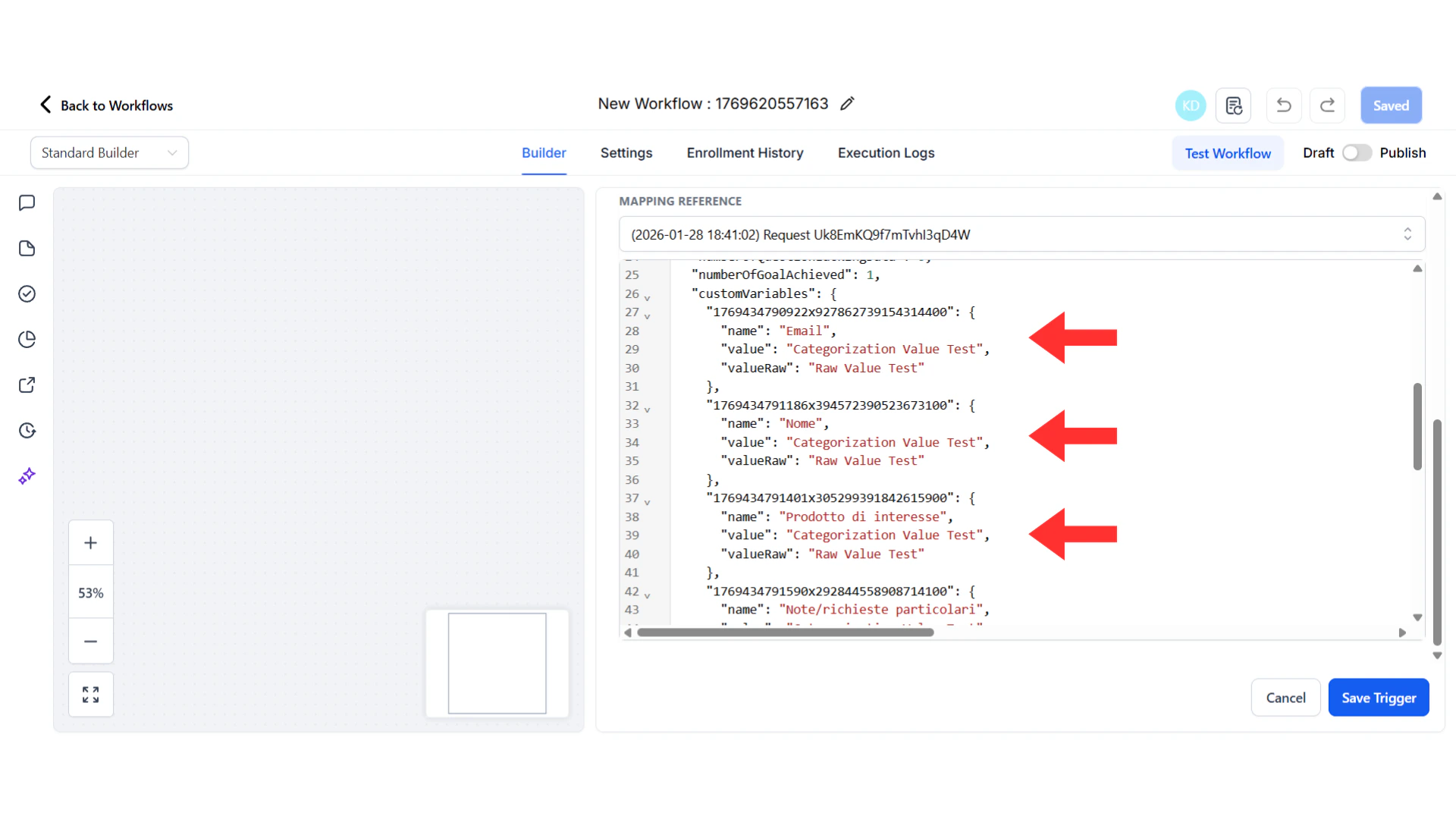
📝 What You Learned (Custom Data)
📝 What You Learned (Custom Data)
customVariables- Specific information your bot collected (budget, company size, timeline, etc.)
name- What you asked about (“Budget”)value- Categorized answer (“$10k-50k”)valueRaw- Exact words they used (“We have around 30k to spend”)
Important: Not All Events Send All Data
The test you just ran shows you the data for “New inbound contact” events. Different events send different data. Don’t worry if you don’t see every field mentioned above—you’re seeing exactly what’s relevant for your event.Step 4: Set Up Your Action
Time needed: 5 minutes Now comes the fun part: deciding what should automatically happen when Irelia sends data to Go High Level.Choose Your First Action
Ask yourself: “When someone first contacts my agent, what’s the ONE most valuable thing that should happen automatically?” Common answers:- ✅ Update my CRM → Create/Update Contact (native GHL, most common)
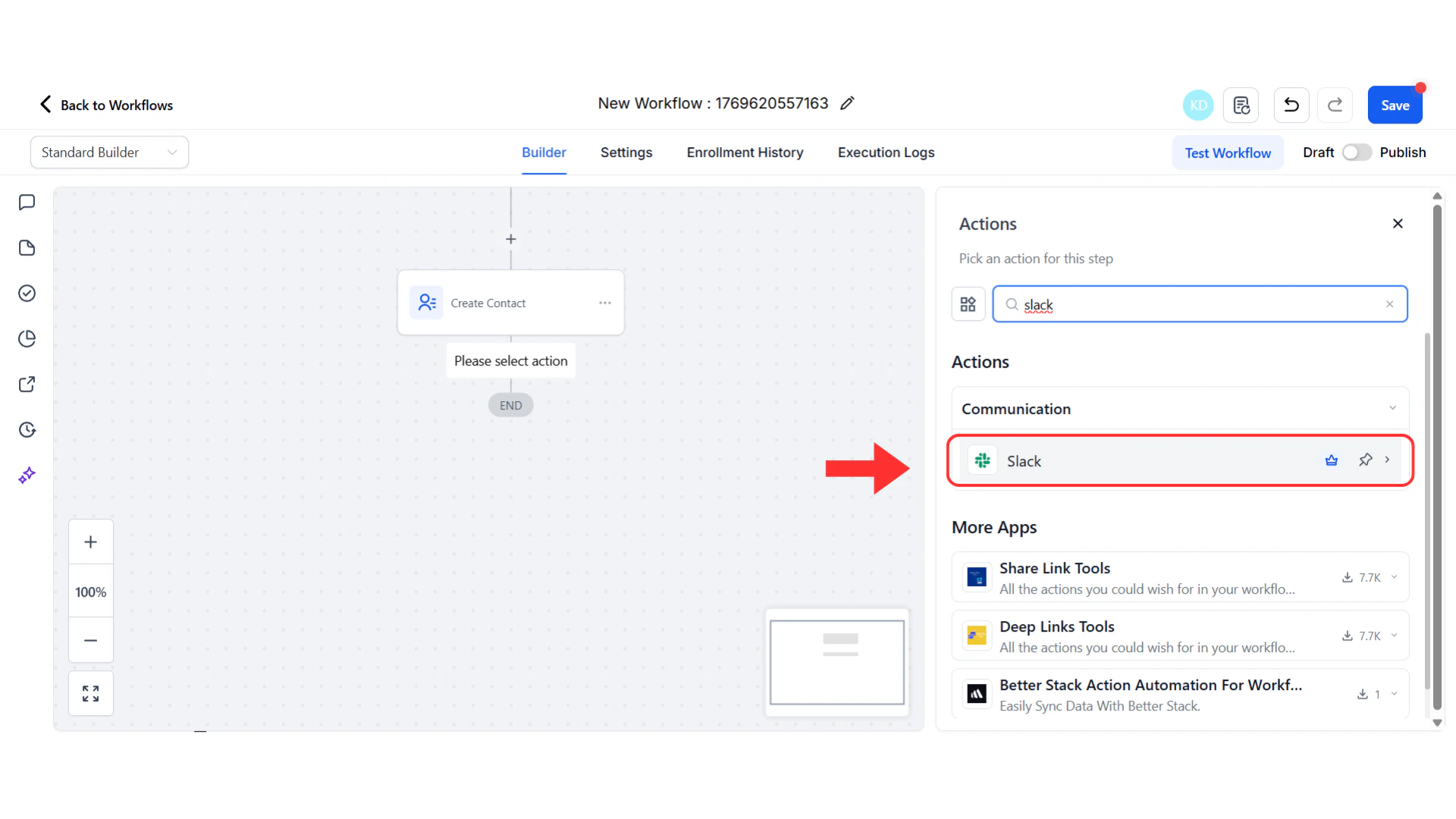
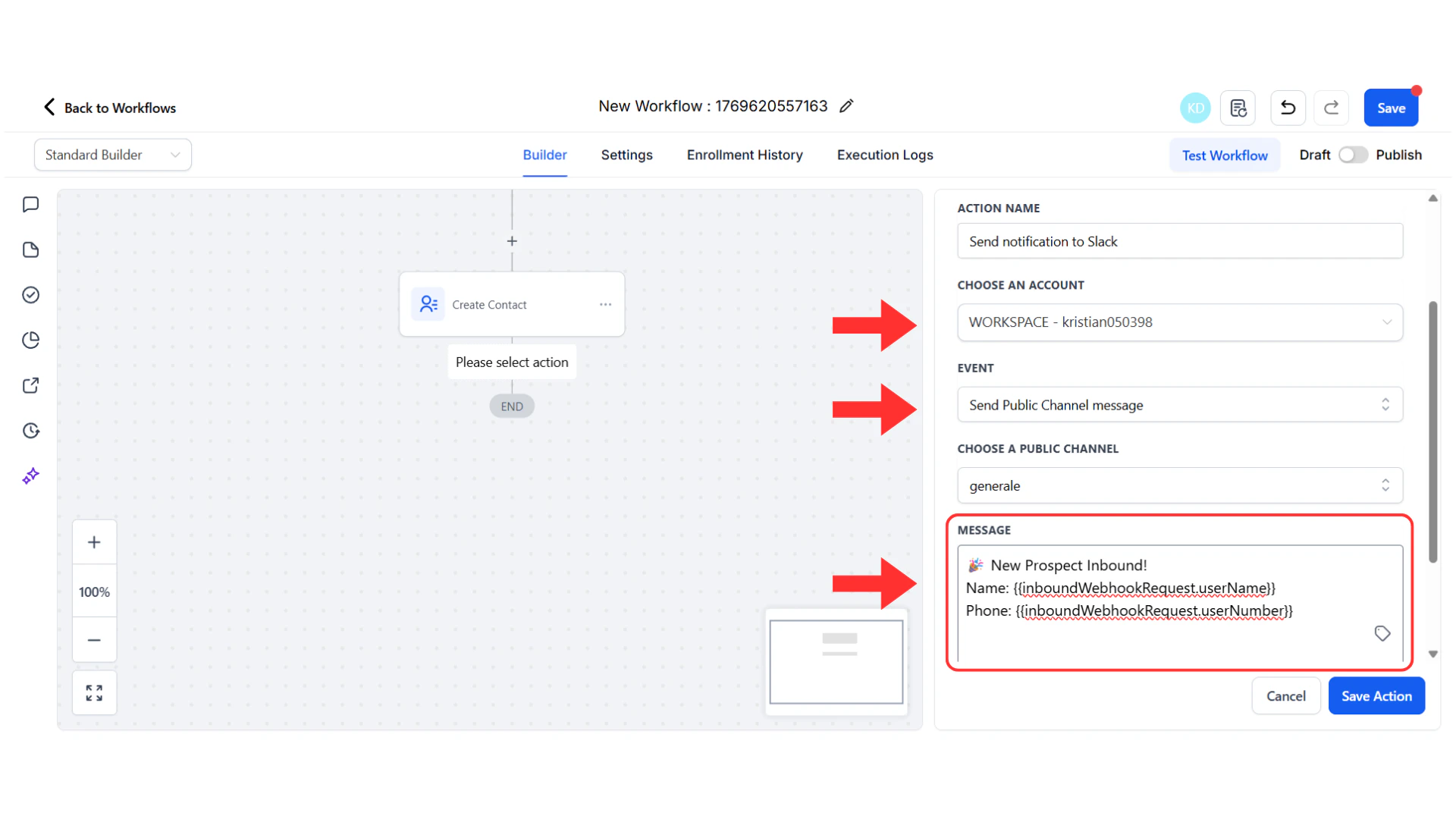
- ✅ Alert my team → Send Internal Notification or Slack (immediate visibility)
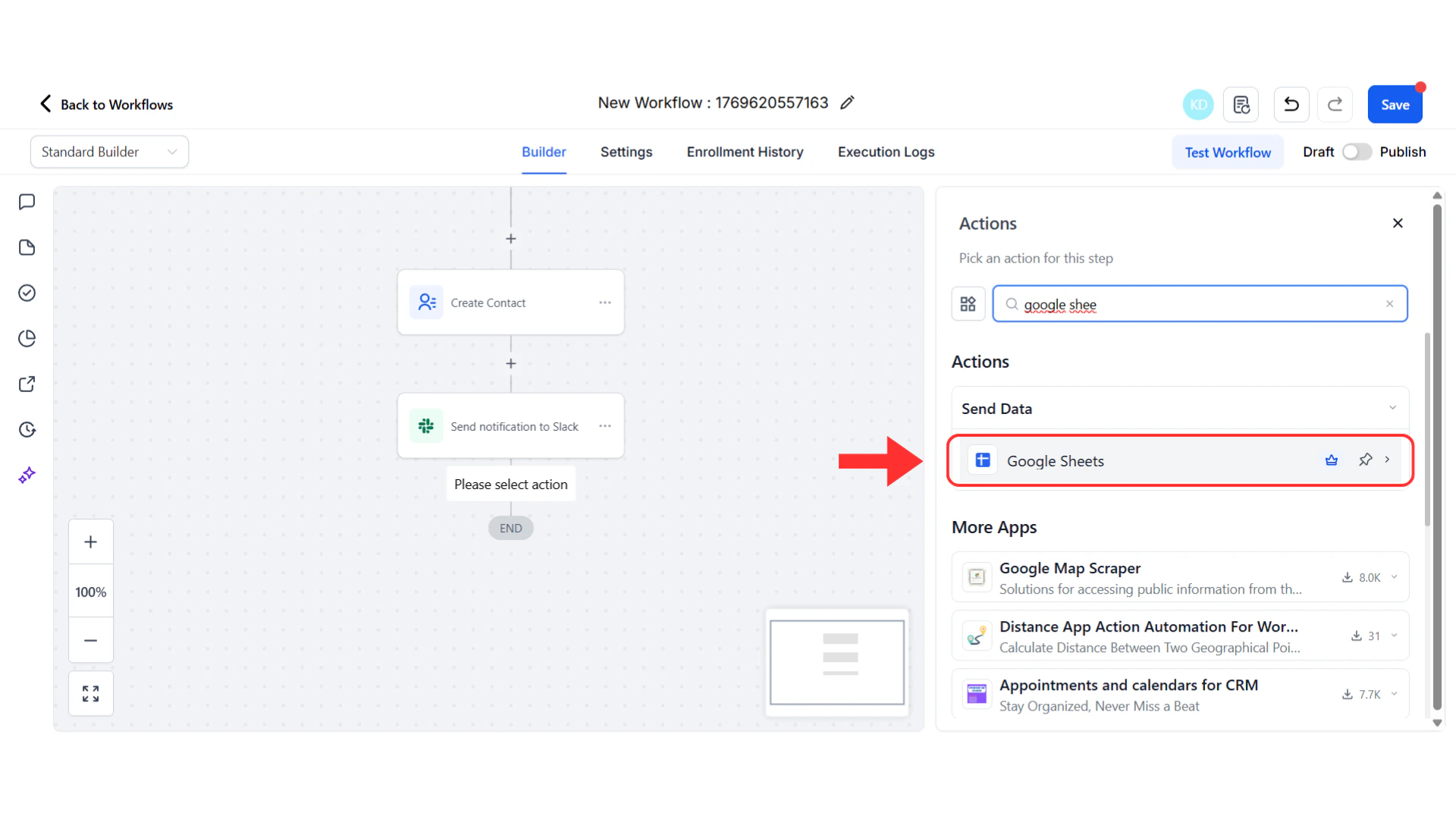
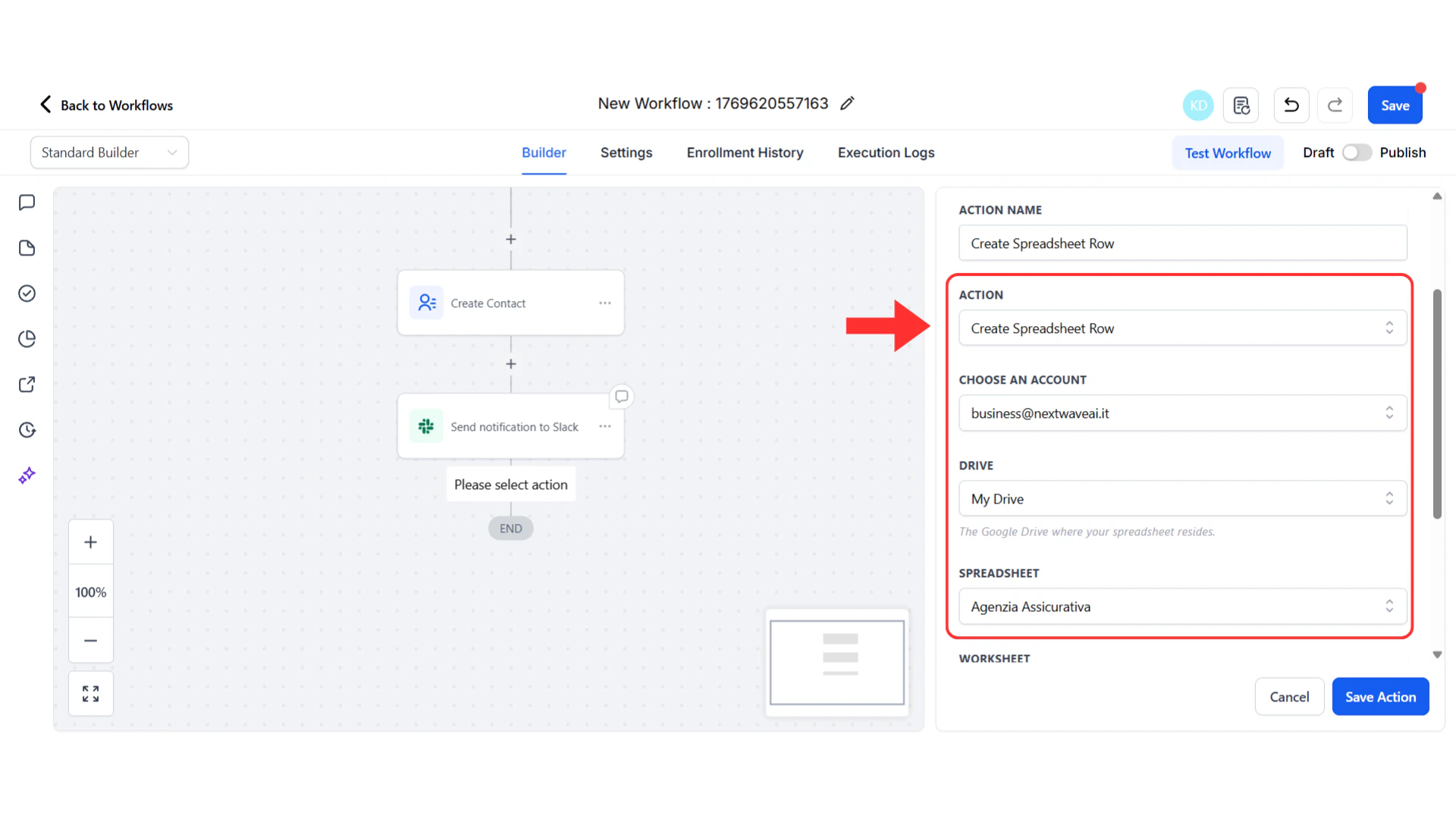
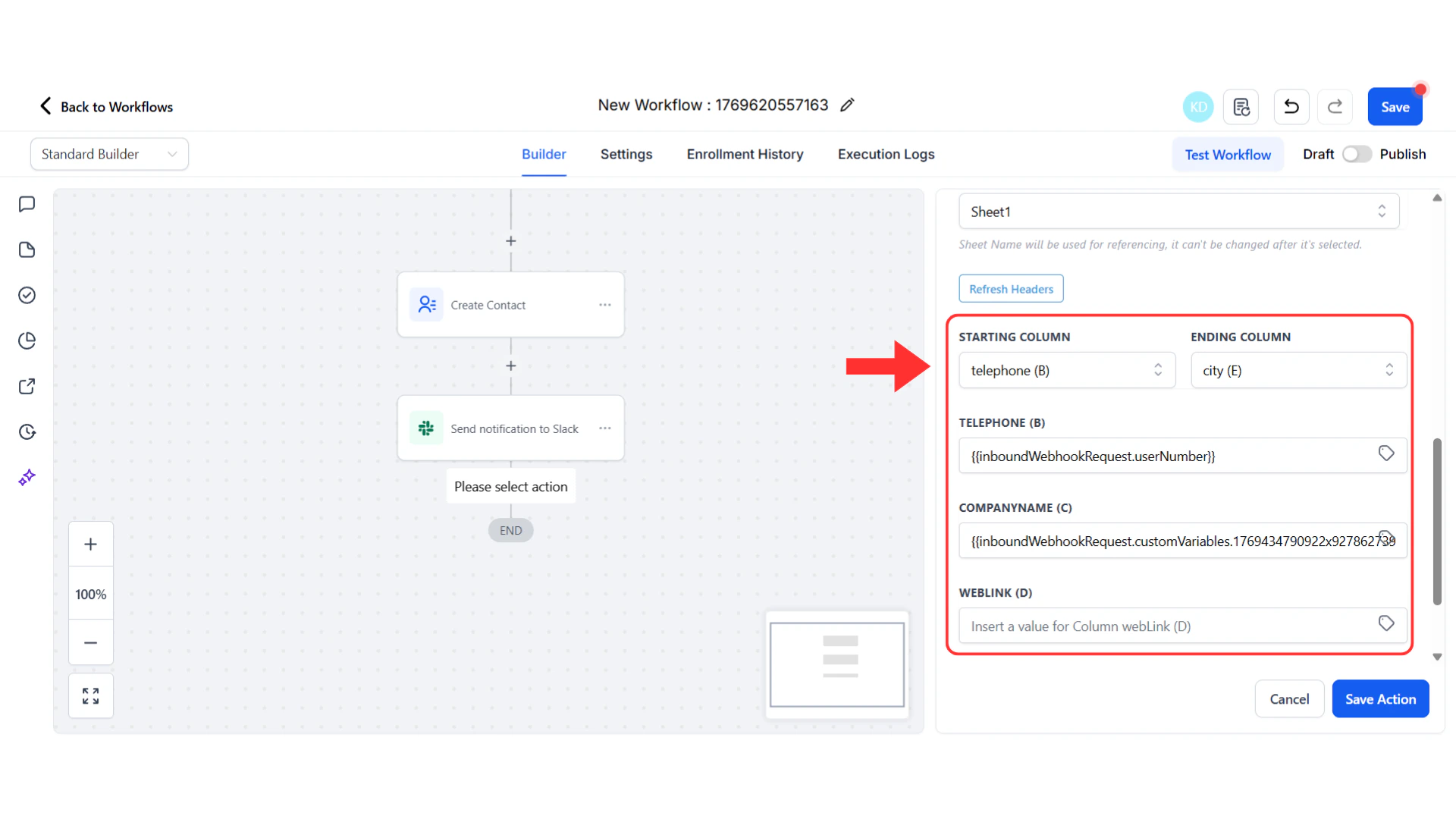
- ✅ Log it for reporting → Google Sheets (external tracking)
- ✅ Start a sequence → Add to Campaign or Workflow (begins nurture process)
If you want to create more complex automations or connect different business tools, we suggest searching on YouTube the exact outcome you wish to achieve (E.g. “How to add contacts to pipelines in Go High Level workflows”)
- Example A: GHL CRM Contact
- Example B: Slack Notifications
- Example C: Google Sheets
Create/Update GHL CRM Contact
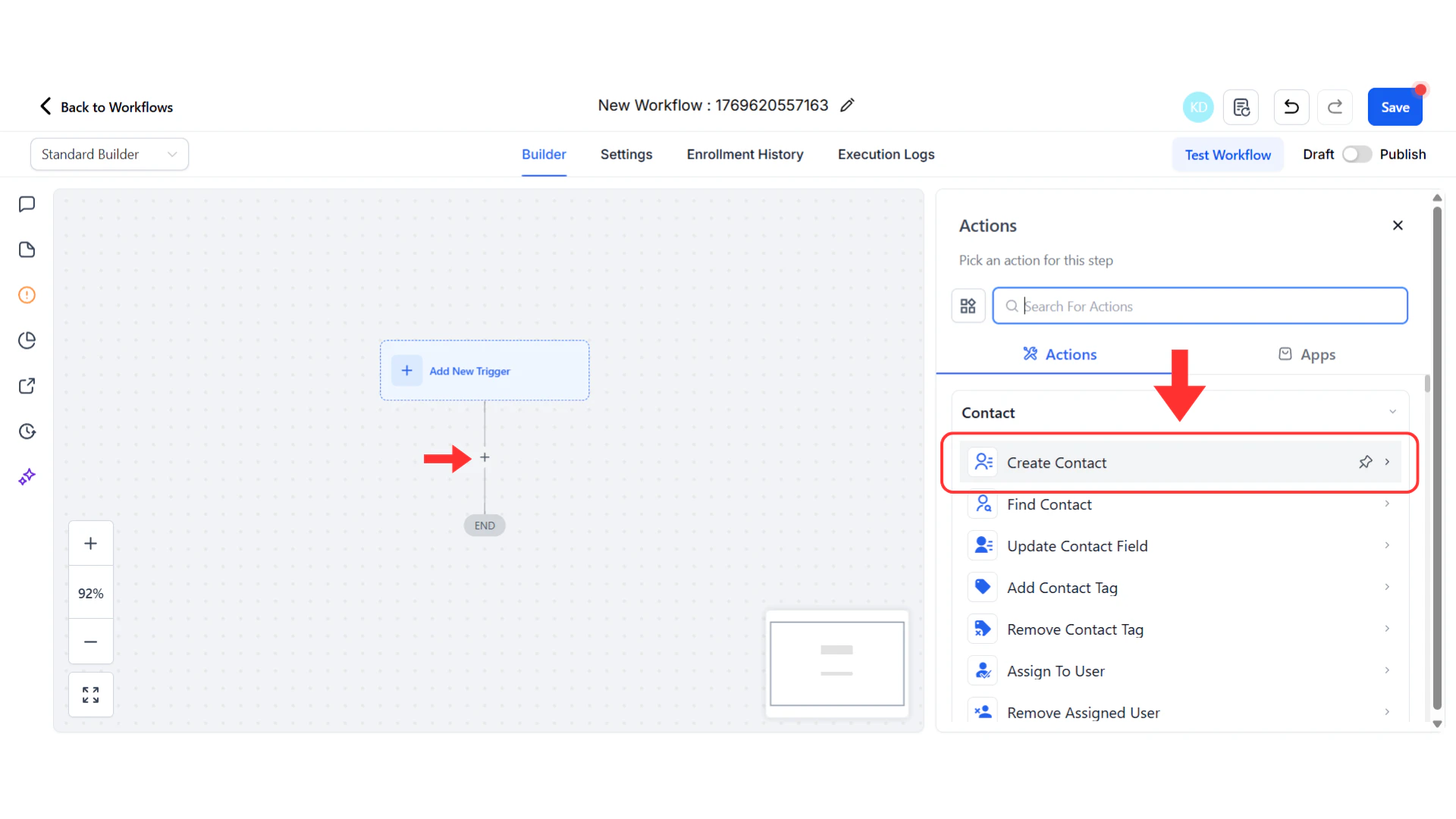
Recommended for GHL users- In your workflow, click the ”+” button below your Inbound Webhook trigger
- Select “Add Action”
- Search for “Create Contact” and select it
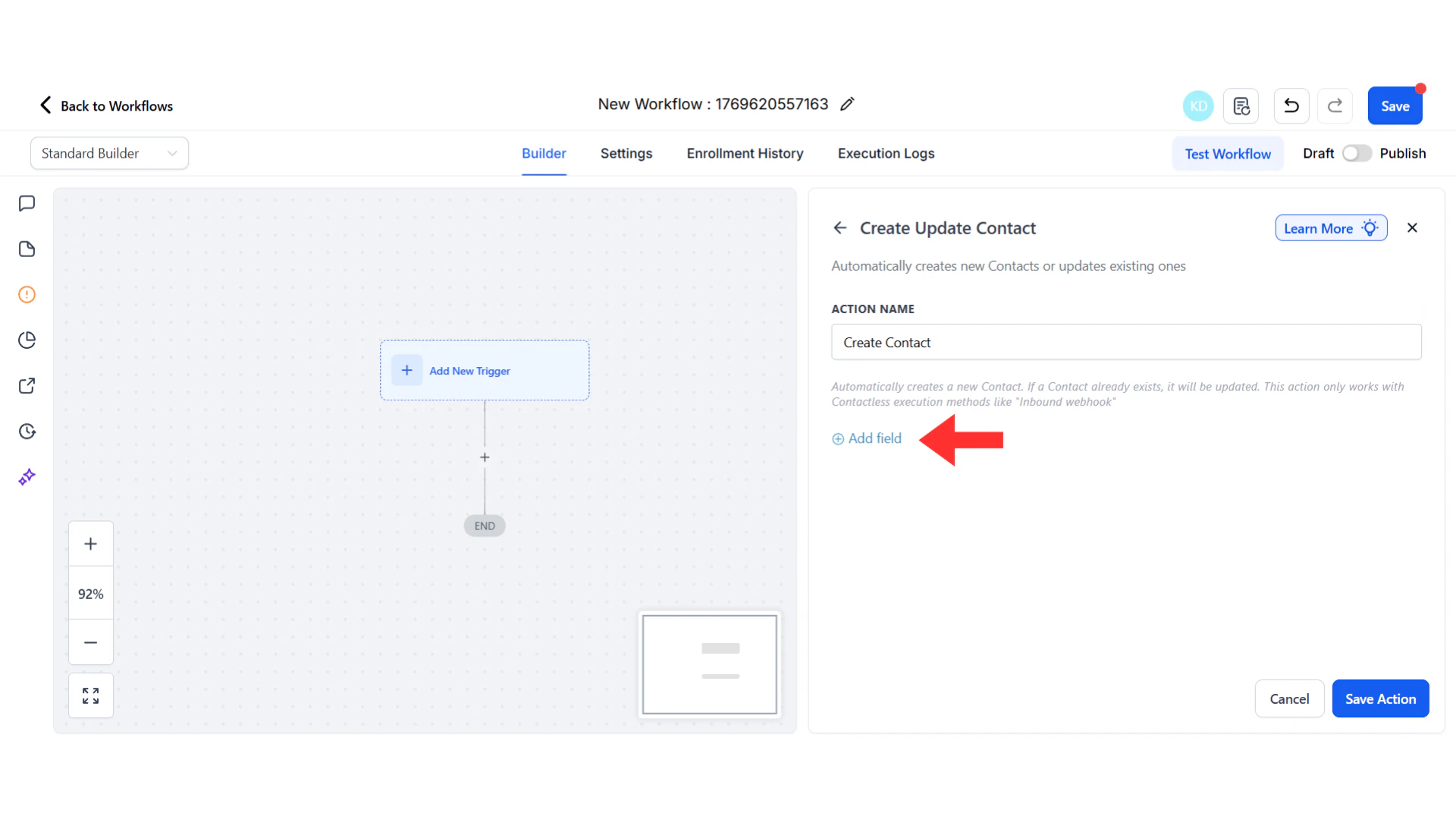
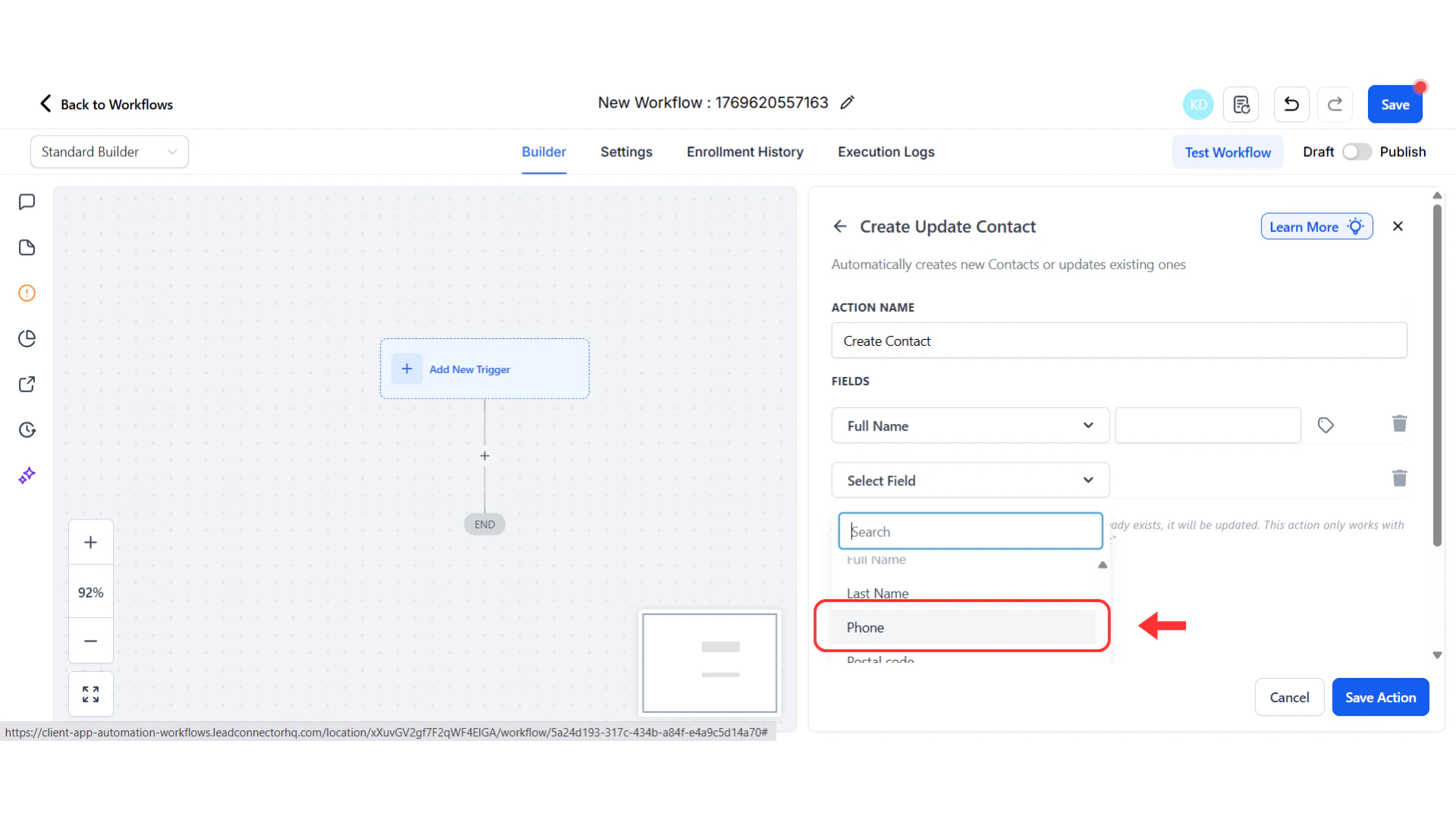
- The Fields section will appear empty at first—you need to add the specific fields you want to populate
- Click the ”+” icon to add a field to the contact
- From the dropdown, select “Full Name” and click to add it
- Repeat to add “Phone” (and any other fields you need)
- Map Irelia data to each field:
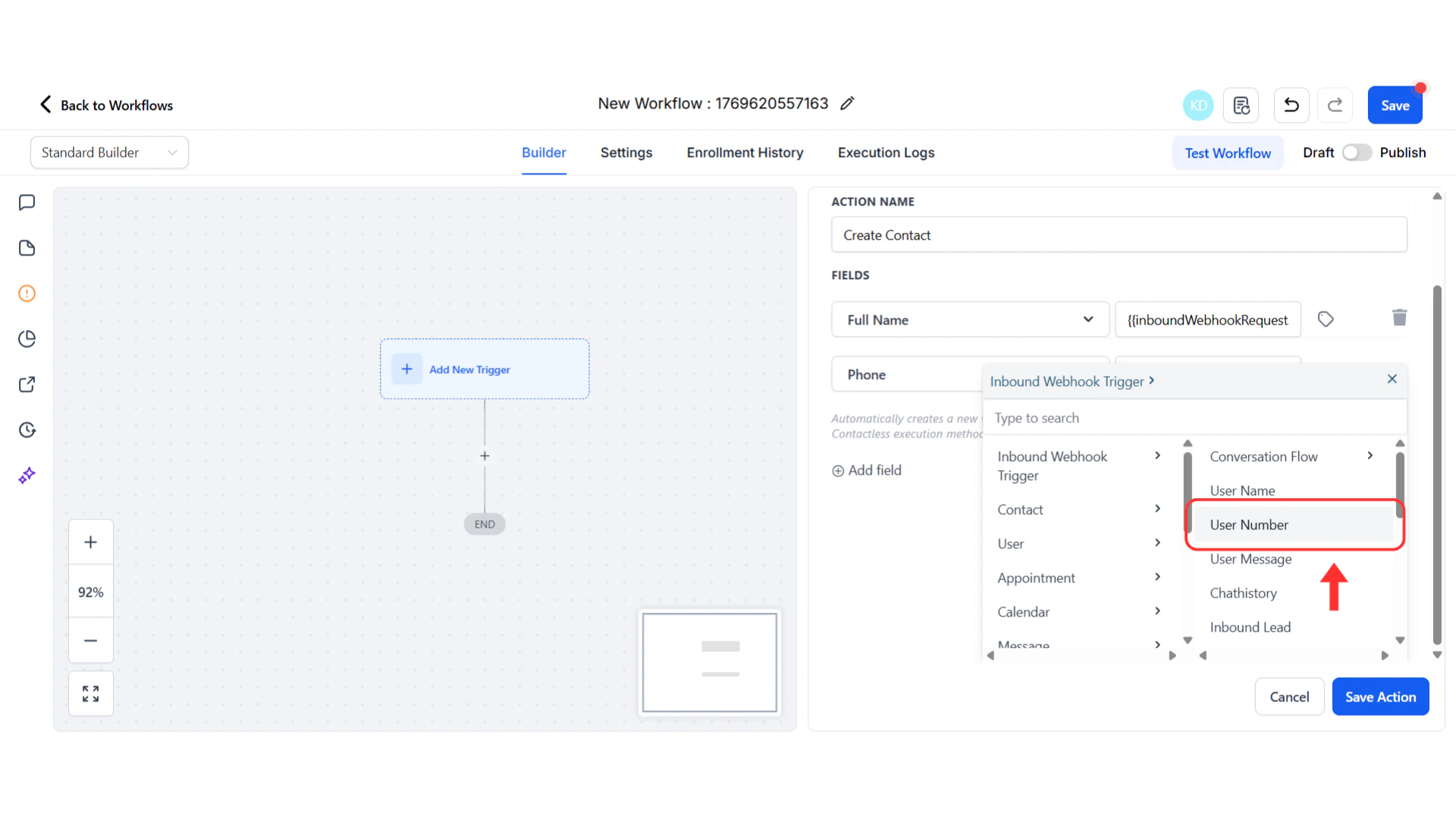
- Next to the “Full Name” field, click the custom variable picker icon → Select “Inbound Webhook Trigger” → Choose
userName - Next to the “Phone” field, click the custom variable picker icon → Select “Inbound Webhook Trigger” → Choose
userNumber
- Next to the “Full Name” field, click the custom variable picker icon → Select “Inbound Webhook Trigger” → Choose
-
Add more fields as needed by clicking the ”+” icon again:
- Contact Source: Add this field → Type “Irelia” as a static value
- Custom Fields: Add any custom fields you’ve created → Use the custom variable picker to map
customVariablesvalues from the webhook (budget, company size, etc.)
- Click “Save Action”
Step 5: Test Your Complete Automation
Time needed: 3 minutes Let’s test the entire workflow end-to-end to make sure everything works together.Run Your Test
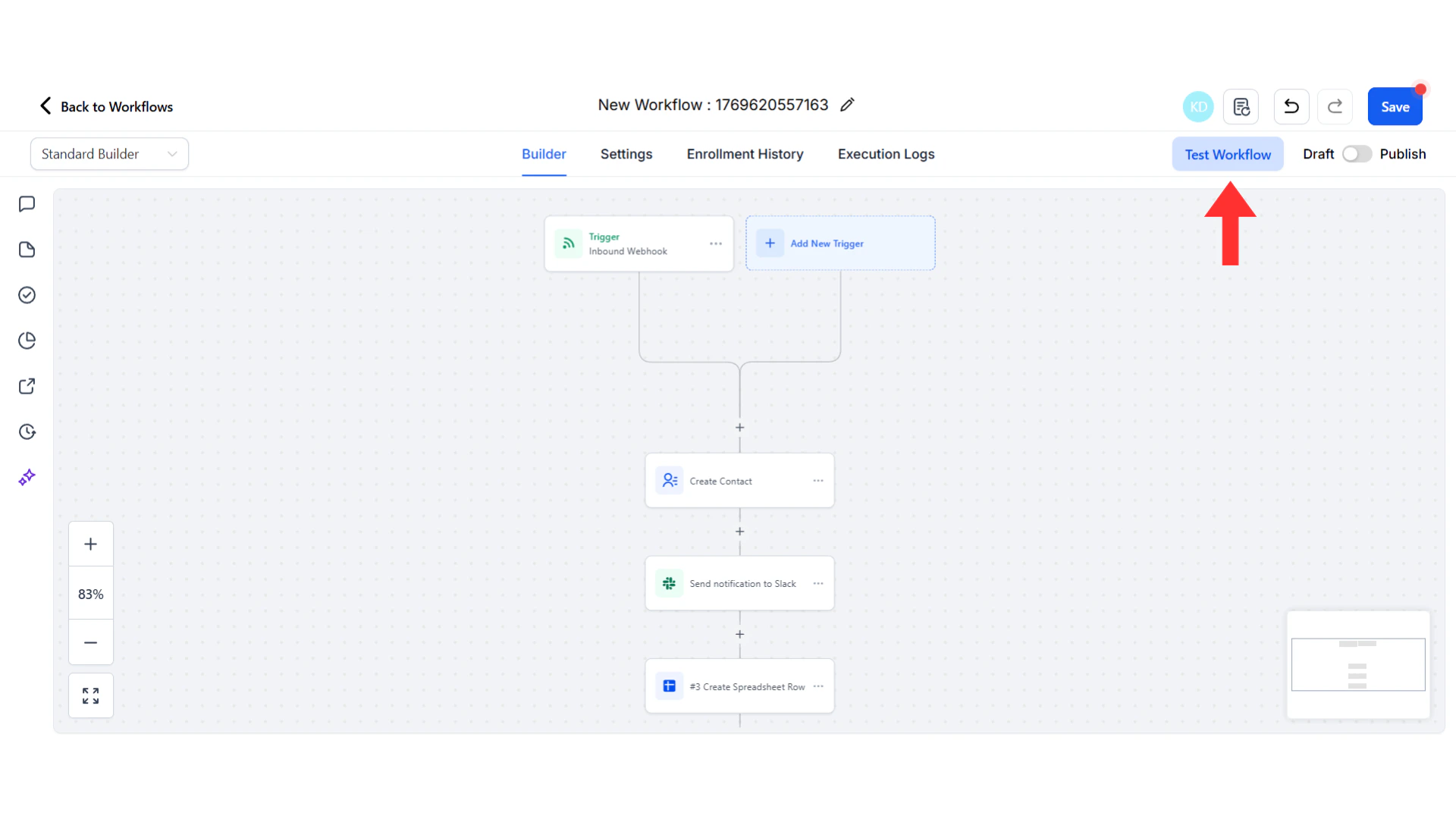
- In your workflow builder, click the “Test Workflow” button (usually in the top right)
- Select a user from your CRM to run your workflow with
- Run the Test
Verify It Worked
Now check your destination to confirm:- GHL CRM Contact
- Slack
- Google Sheets
If you chose Update GHL CRM Contact: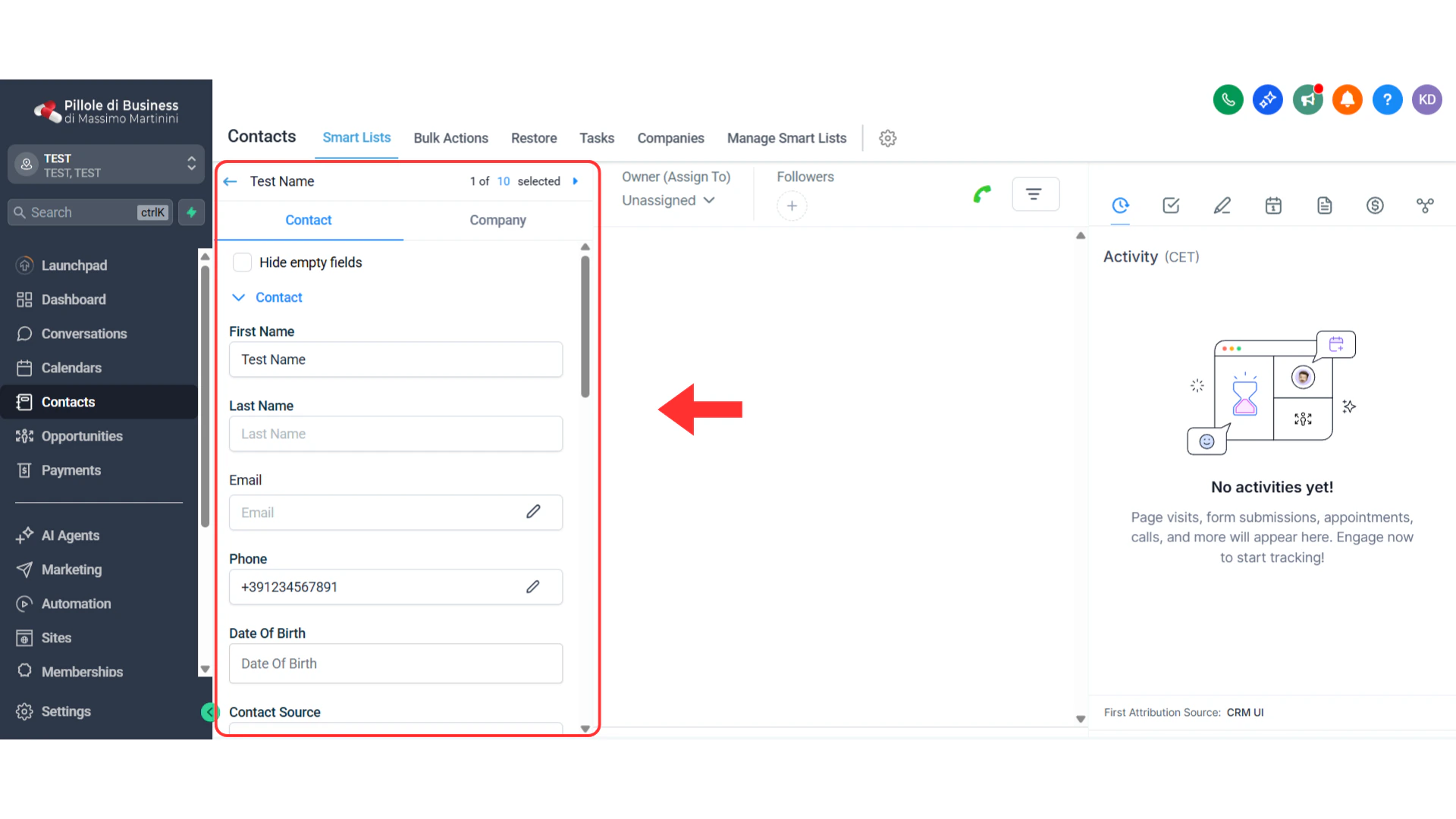
- Go to Contacts in the left sidebar
- Search for the test contact by phone number
- Verify the contact was created/updated with the correct information
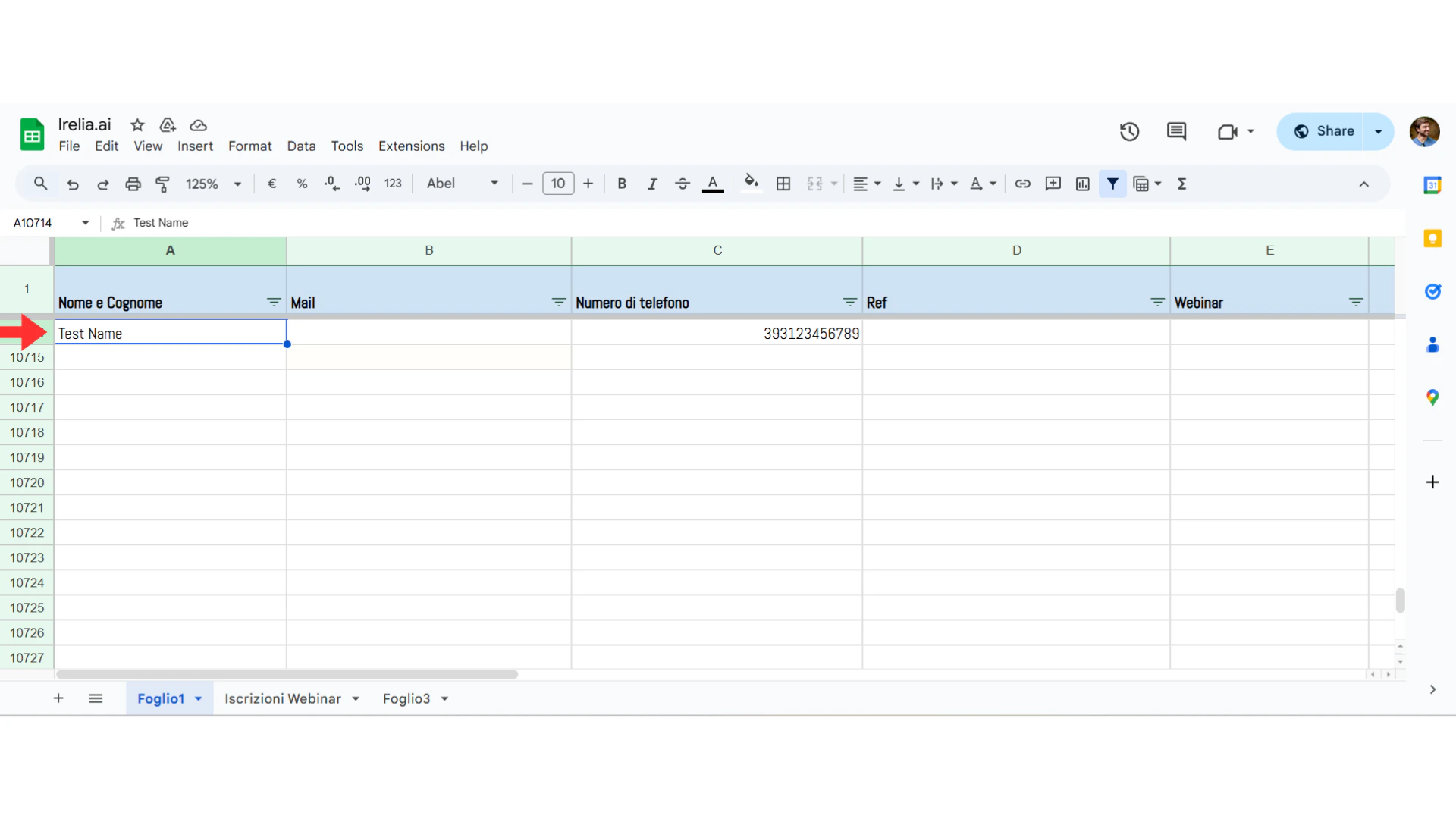
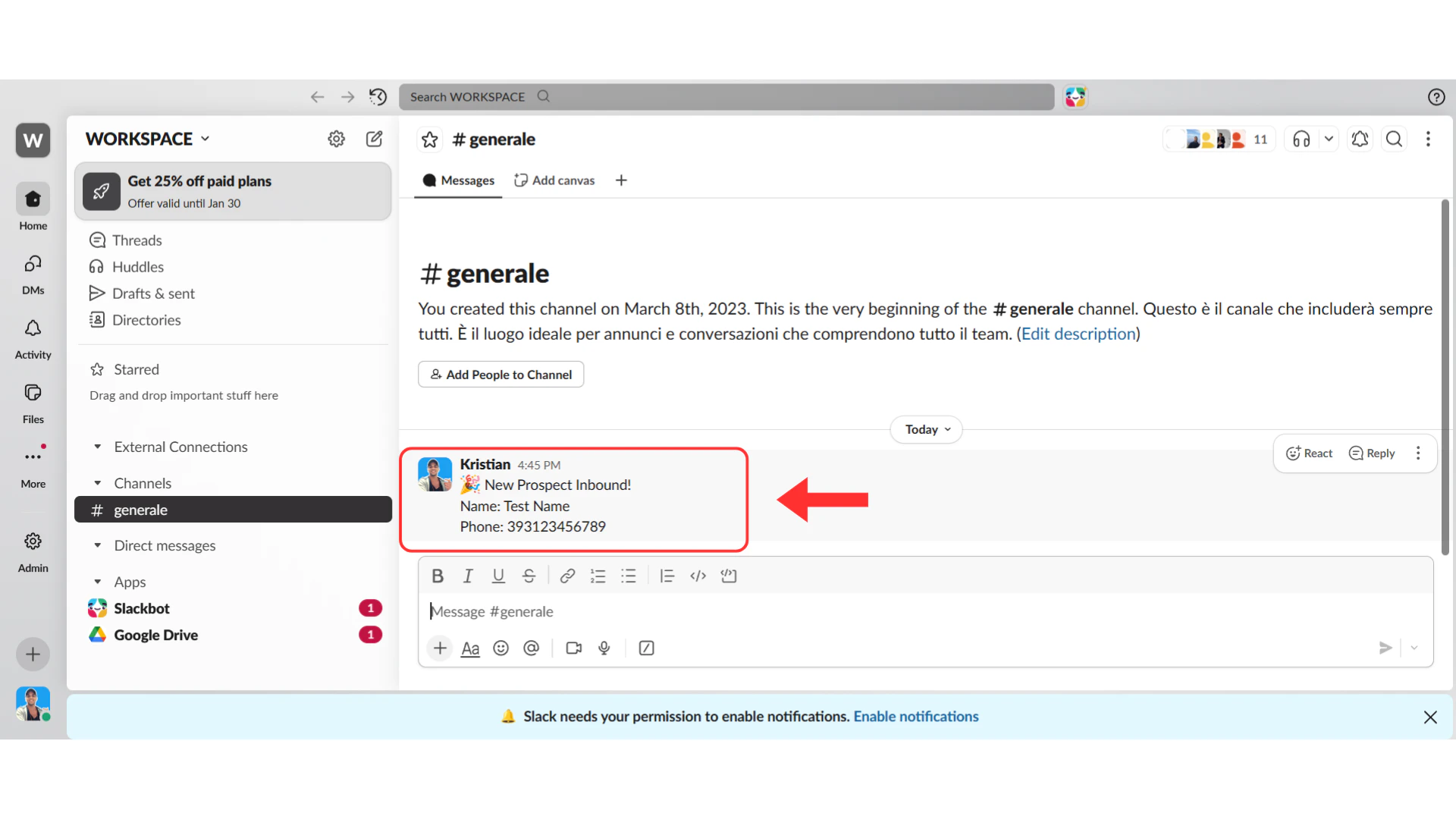
Did you see your data in the right place? Your automation works!
Step 6: Turn It ON
Time needed: 1 minutePublish Your Workflow
- At the top right of your workflow builder, find the “Publish” toggle or button
- Click to switch the workflow to “Published” status
- You’ll see a confirmation that your workflow is now active
Give Your Workflow a Name
- Click on the workflow name at the top (it probably says something like “Untitled Workflow”)
- Rename it to something descriptive like: “Irelia: New Contact → Update CRM”
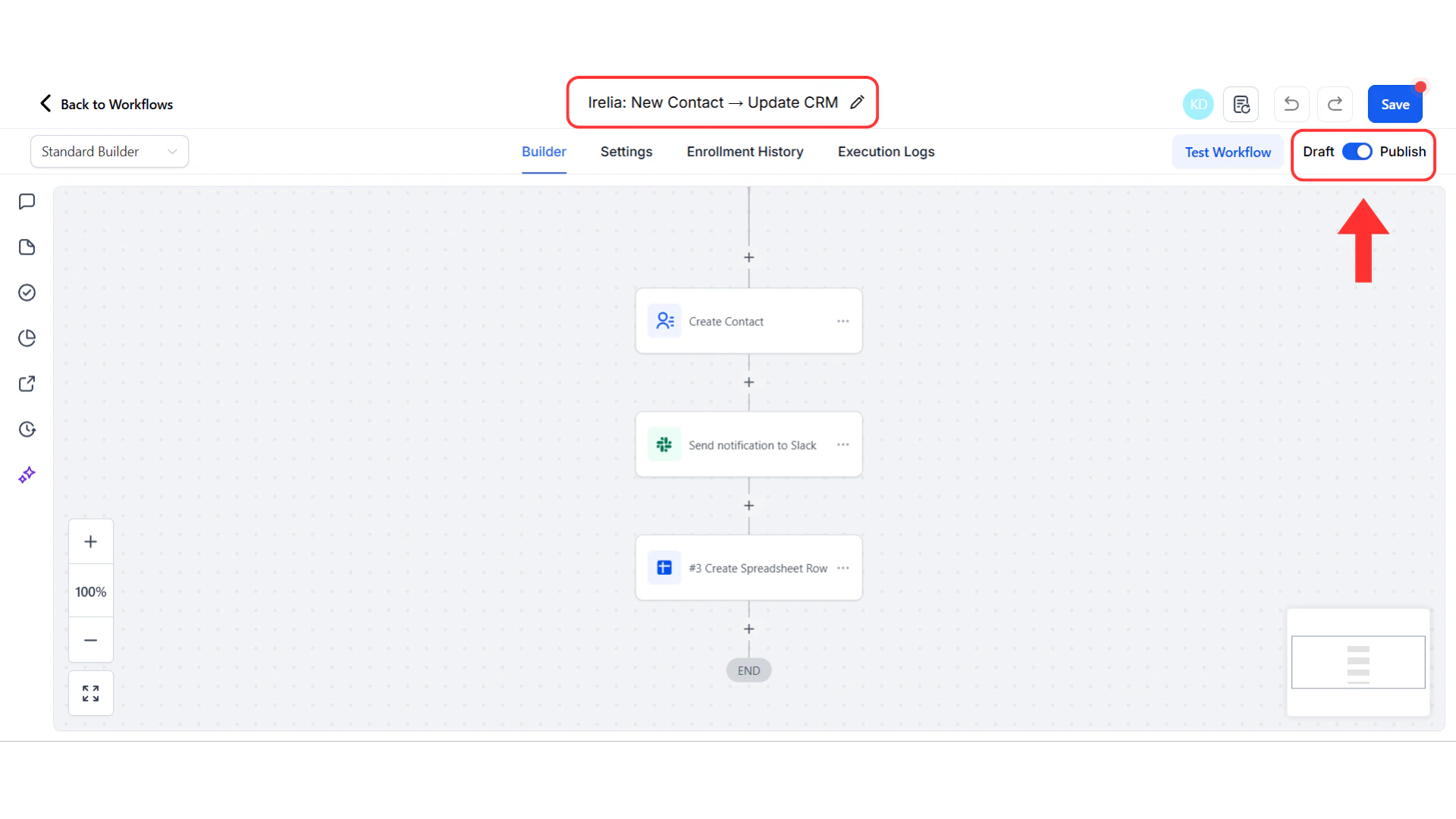
- Click “Save”
Your automation is now live!
🎉 Congratulations!
You did it! Take a moment to appreciate what you just built: ✅ Your AI agent now talks to your Go High Level CRM automatically✅ Important moments trigger instant actions
✅ No more manual data entry or checking dashboards, your systems are always up-to-date
✅ Your leads get faster, better follow-up What happens now:
Every time someone reaches out to your Irelia agent for the first time → Irelia automatically sends their information to Go High Level → GHL immediately performs your action → All without you lifting a finger.
Step 7: Monitor Your Automation
Time needed: Ongoing (just a few minutes when needed)Check Your Workflow History
- Go to Automation → Workflows in the left sidebar
- Click on your workflow
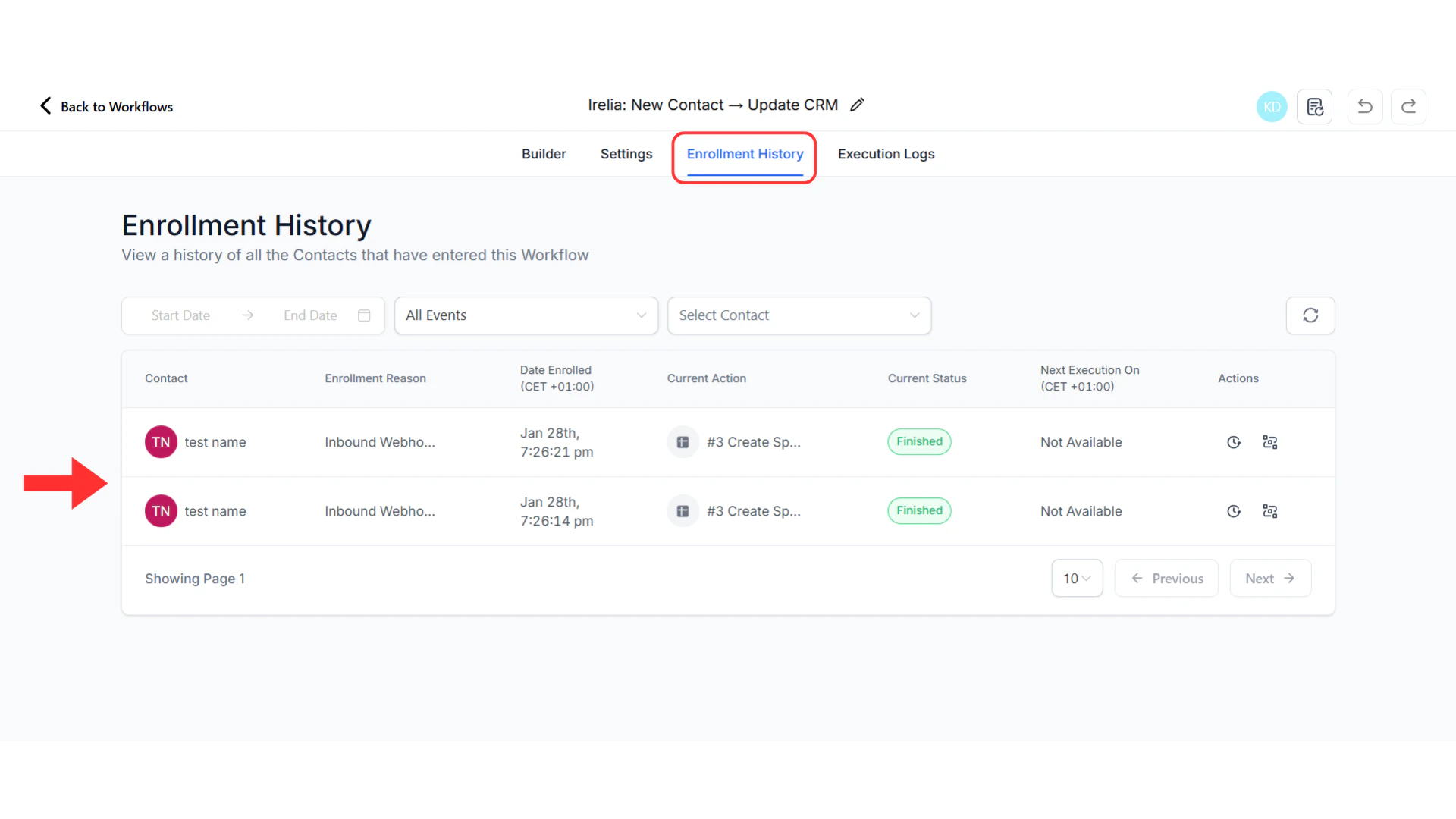
- Click the “Enrollment History” tab
- Here you can see every contact that entered the workflow.
- Look for:
- ✅ Finished (completed)
- ❌ Error (with details)
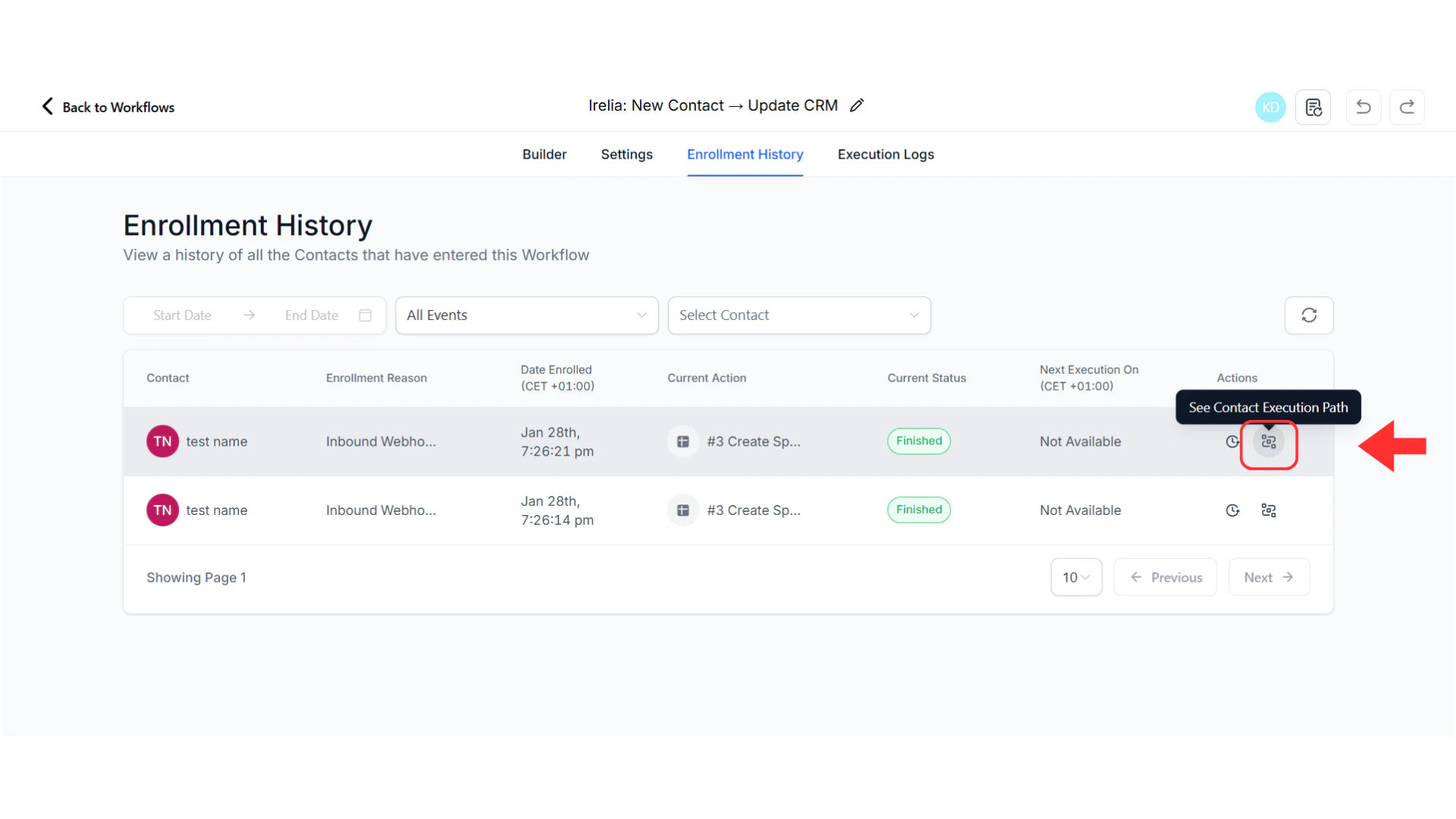
- Click on a “View Execution History” on a specific contact to see their Execution Logs (step-by-step details of what happened)
What to Monitor
First few days: Check daily to ensure workflows run successfully and data looks correct. Ongoing: GHL shows workflow errors in your notification center, so you don’t need to check constantly. Just verify things are working during the first few days.What’s Next?
Now that you have one working automation, the possibilities are endless. If you want to connect to more events like “New Data Gathered”, “New Lead Qualified”, or “New Goal Achieved”, simply repeat the steps we just did and customize the actions (Step 4) to achieve your desired result. Your options from here:- 🎯 Want to track another event? Create a new Workflow and repeat this guide — just select a different event in Step 2
- ➕ Want this workflow to do more things? Edit your workflow and click the + button below your action to add more actions/steps
- 🤖 Have another agent to connect? Repeat this guide for your other agents — each can have its own automations
- ⚡ Ready for advanced workflows? Check out the Advanced Automations section below
Reference Sections
Use these sections when you need help or want to go deeper.Troubleshooting Common Issues
Don’t panic! Here are the most common issues and exactly how to fix them.❌ Issue 1: Go High Level Shows No Data Received
❌ Issue 1: Go High Level Shows No Data Received
What this means: Go High Level hasn’t received any data from Irelia yet.How to fix it:Step 1: Verify the webhook URL in Irelia
- Go to Irelia → Events and Notifications
- Check that the webhook URL is filled in for your event
- Make sure it matches EXACTLY the URL from GHL (no extra spaces)
- Click the blue “Test” button in Irelia next to your webhook URL
- Wait 5-10 seconds
- Go back to GHL and check if data appeared in your trigger settings
- If still not working, delete the Inbound Webhook trigger and add a new one
- Copy the NEW webhook URL
- Delete the old URL in Irelia and paste the new one
- Click Test again in Irelia
❌ Issue 2: Workflow Runs But Action Fails
❌ Issue 2: Workflow Runs But Action Fails
What this means: Irelia is sending data correctly, but something’s wrong with your action setup.How to fix it:Step 1: Check the execution logs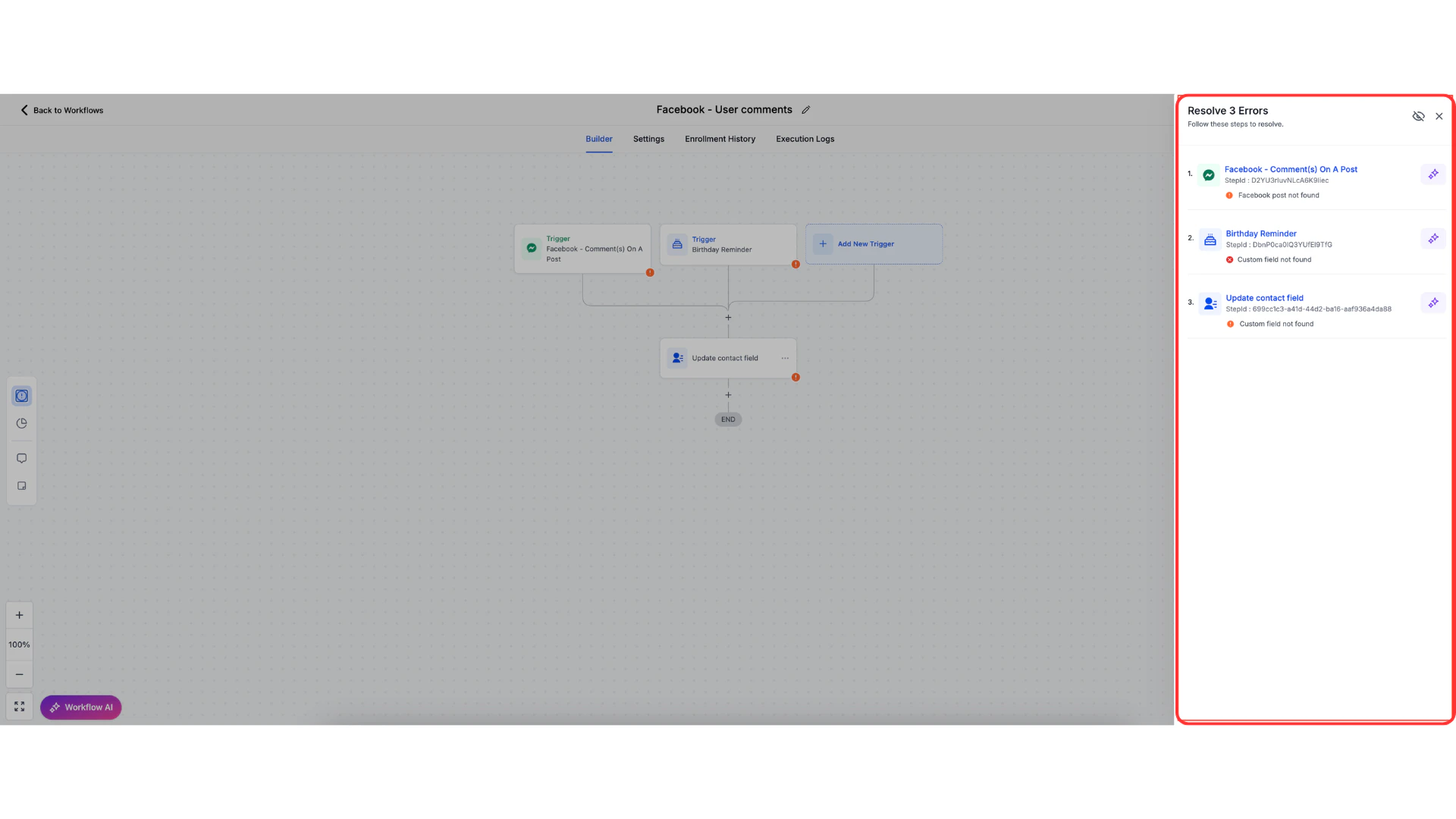
- Go to your workflow → Execution Logs
- Click on the failed run to see details
- Look for error messages that explain what went wrong
- Edit your action
- Look for fields marked as required
- Make sure each required field has data mapped
- If using external apps (Google Sheets, Slack), go to Settings → Integrations
- Disconnect and reconnect the problematic integration
- Update your workflow action with the new connection
- Google Sheets: Confirm the spreadsheet wasn’t deleted
- Slack: Check the channel wasn’t archived
- GHL: Verify custom fields, tags, or pipeline stages still exist
❌ Issue 3: Workflow Runs But I Don't See the Result
❌ Issue 3: Workflow Runs But I Don't See the Result
What this means: The workflow says it succeeded, but you can’t find the data.How to fix it:Step 1: Check Execution Logs for details
- Go to your workflow → Execution Logs
- Click on your recent run to expand details
- Look at each step to see exactly what data was processed
- GHL Contacts: Use the search bar and search by phone number. Check if you’re viewing a filtered list.
- Google Sheets: Scroll to the bottom (new rows are added at the end). Try Ctrl+F to search.
- Slack: Check you’re in the right channel. Search for messages from the app.
- Go back to your workflow editor
- Look for any If/Else branches or conditions
- Verify your data passes the conditions
❌ Issue 4: Workflow Worked Once But Stopped
❌ Issue 4: Workflow Worked Once But Stopped
What this means: Your automation worked during testing but stopped working for real events.How to fix it:Step 1: Check if your workflow is Published
- Go to Automation → Workflows
- Verify your workflow shows “Published” status
- If it says “Draft,” click to publish it
- Go to Settings → Integrations
- Look for any disconnected apps (yellow warning icons)
- Reconnect any integrations that show issues
- Go to Irelia → Events and Notifications
- Confirm the webhook URL is still there and matches your GHL workflow
- Some GHL plans have workflow execution limits
- Check your account usage and upgrade if needed
❌ Issue 5: Getting Duplicate Contacts
❌ Issue 5: Getting Duplicate Contacts
What this means: The same contact is being created multiple times instead of updating the existing record.Why this shouldn’t happen: GHL automatically checks for duplicate contacts and updates existing records instead of creating new ones when a matching phone number is found. So under normal circumstances, you won’t see duplicates.However, there’s one common edge case: Phone number format mismatch. If you previously saved contacts without the country prefix (e.g.,
3401234567) while Irelia sends phone numbers with the prefix (e.g., 393401234567), GHL sees these as two different phone numbers and creates a duplicate—because technically, the numbers don’t match.How to fix it:Step 1: Standardize your existing contacts- Go to Contacts in GHL and review your existing records
- Update phone numbers to include the country prefix (e.g.,
39for Italy,1for US) - This ensures GHL can match incoming data from Irelia to your existing contacts
- Irelia sends phone numbers with the international prefix by default
- Make sure any contacts you manually add also include the prefix
- This prevents future mismatches
- In GHL, go to Contacts and search for duplicates
- Select the duplicate records and use the Merge function to combine them
- Choose which record to keep as the primary and merge the data
❌ Issue 6: Custom Variables Are Empty
❌ Issue 6: Custom Variables Are Empty
What this means: The customVariables field is empty or doesn’t have expected data.How to fix it:Step 1: Use the right event
- “New Inbound Contact” fires BEFORE data collection
- Use “Data Gathered”, “Goal Achieved” or “New Lead Qualified” events instead if you need collected data
- Custom variables are nested in the webhook data
- Make sure you’re selecting the correct path to the variable values
- Instead of using the Test button, have a full conversation that reaches data collection
- Then check if data flows through
🆘 Still Stuck?
Irelia.ai Support:- Contact support in the WhatsApp priority support group or send an email to “info@irelia.ai”
- Include: Screenshots of your configuration, the error message, and what you expected vs. what happened
- Visit: help.gohighlevel.com
- Use the in-app chat support
- Check the GHL Facebook community for common solutions
Quick Checklist
Use this to verify your setup is complete:Essential Setup
- Webhook URL copied from Go High Level
- URL pasted into Irelia for your chosen event
- Test data sent from Irelia
- Test data received in GHL workflow
- Action configured (Update CRM, Google Sheets, or Slack)
- Action tested successfully
- Workflow published
- Workflow given a descriptive name
Verification
- Triggered a real event (or used Test button)
- Confirmed data appeared in destination (CRM, Sheet, Slack)
- Checked Execution Logs shows successful run
All checked? You’re good to go!
Advanced Automations (Optional)
Ready to do more? These sections show you how to build sophisticated workflows.Search and Update Existing Records
Search and Update Existing Records
Since GHL’s “Create Contact” action handles this automatically by phone number, you’re already covered for basic contact updates!However, for more advanced scenarios like updating Opportunities or Pipeline stages, you may need a two-step approach.Example: Update an existing opportunity when a lead gets qualifiedTrigger: Lead QualifiedActions: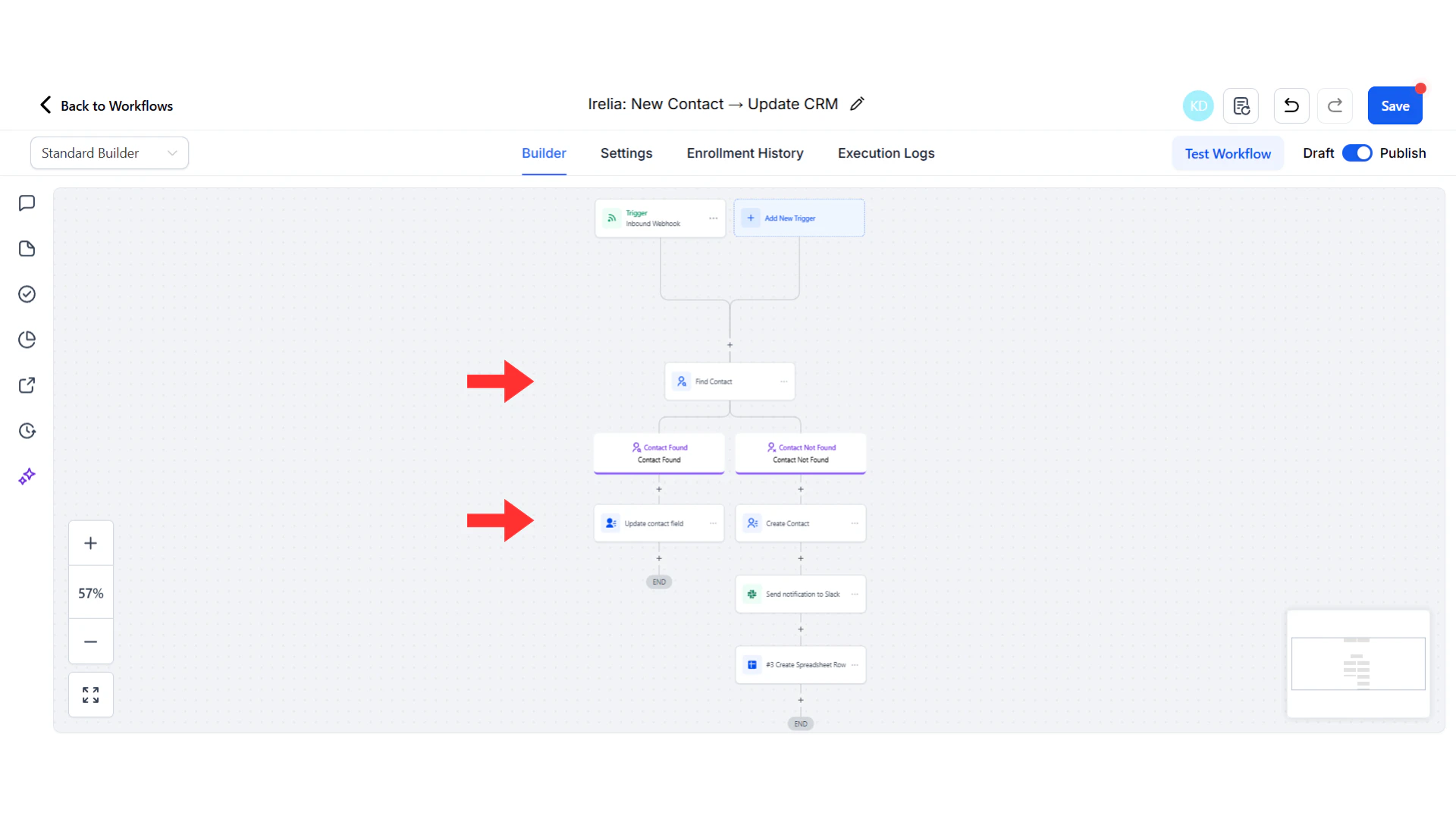
-
Find the contact
- Add action: Find Contact
- Set search criteria to
userNumberfrom the webhook - This finds the contact matching the prospect’s phone number
-
Update their opportunity
- Add action: Update Opportunity
- Use the contact ID from Step 1
- Update the pipeline stage to “Qualified”
- Add notes with qualification details
Using Conditions (If/Else) to Control When Actions Run
Using Conditions (If/Else) to Control When Actions Run
Conditions let you add branching logic so different actions run based on data values.Example: Only add to “Hot Leads” pipeline if the prospect’s budget is “$10k+” or higher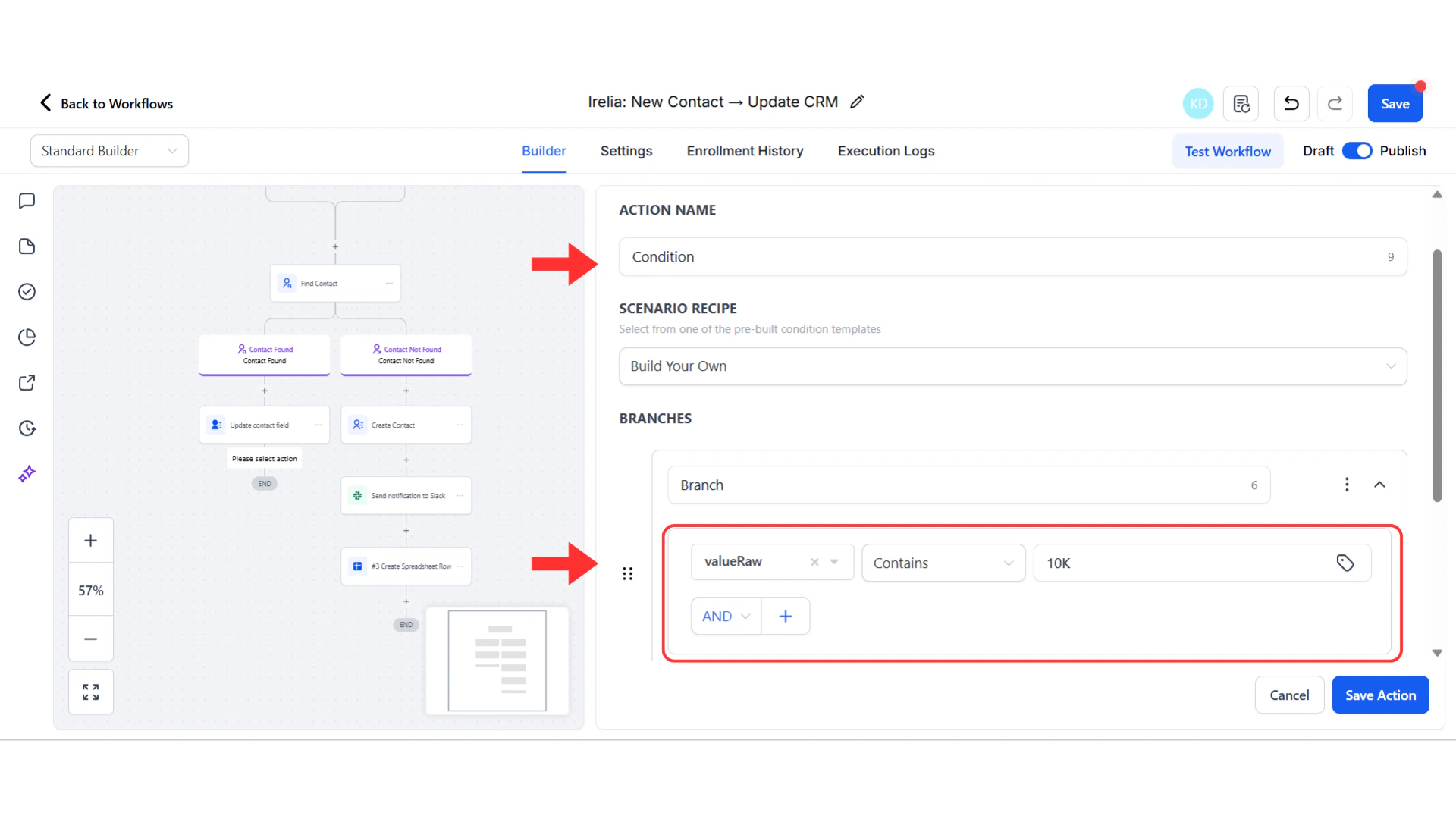
- In your workflow, click the ”+” button between your trigger and action
- Select “If/Else” (or “Condition”)
- Set your condition:
customVariables Valuecontains$10k - Add your “Update Pipeline” action under the “If Yes” branch
- Add a different action (or nothing) under the “If No” branch
- Only add to hot pipeline if budget matches your target →
customVariables Valueequals$10k-50k - Only notify sales manager if company size is “Enterprise” →
customVariables ValuecontainsEnterprise - Only send to sales if lead is qualified →
leadQualificationequalsfit
Multi-Step Workflows (Multiple Actions from One Trigger)
Multi-Step Workflows (Multiple Actions from One Trigger)
Why do one thing when you can do several?Example: When a lead is qualified: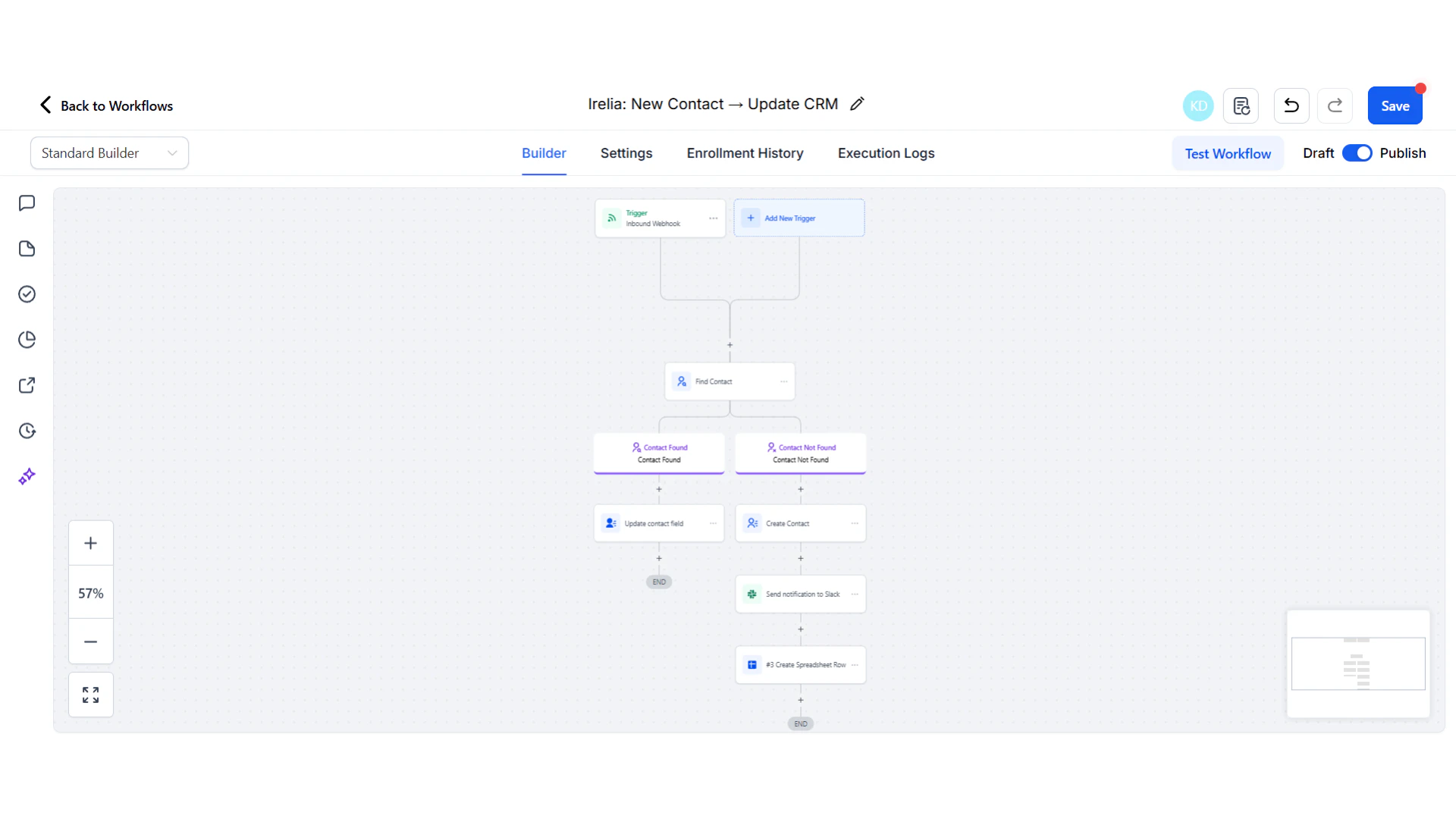
- Update contact with “Qualified” tag
- Move opportunity to “Qualified” stage
- Send internal notification to sales team
- Add to email nurture campaign
- Log in Google Sheet for reporting
- After your first action, click the ”+” button below it
- Select “Add Action”
- Add your second action and configure it
- Repeat for additional actions
Using Go High Level's Native Power
Using Go High Level's Native Power
GHL has powerful built-in features you can trigger from your Irelia webhook:Create/Update Opportunity:
- Add leads to pipelines automatically
- Update deal stages based on conversation progress
- Route leads to specific sales reps based on criteria
- Use round-robin assignment for fair distribution
- Generate follow-up tasks for your team
- Include conversation context from Irelia
- Alert team members instantly
- Include lead details and qualification status
Real-World Use Case Examples
Use Case 1: Qualified Lead Fast Track
Use Case 1: Qualified Lead Fast Track
Trigger: Lead QualifiedActions:
- Update contact with “Qualified” and “AI-Qualified” tags
- Create opportunity in “Hot Leads” pipeline
- Send internal notification to sales team via SMS
- Add to “Hot Lead Welcome” email sequence workflow
- Log in “Qualified Leads” Google Sheet for reporting
Use Case 2: Disqualified Lead Nurture
Use Case 2: Disqualified Lead Nurture
Trigger: Lead DisqualifiedActions:
- Update contact with “Nurture” tag
- Add to long-term email nurture sequence workflow
- Create task for follow-up in 3 months
- Log in “Nurture List” Google Sheet
Use Case 3: Knowledge Gap Tracking
Use Case 3: Knowledge Gap Tracking
Trigger: Question Lacking AnswerActions:
- Send Slack notification to content team with the question
- Create task in GHL for manual response
- Log in “Knowledge Base Gaps” Google Sheet for review
Use Case 4: Goal Achievement Flow
Use Case 4: Goal Achievement Flow
Trigger: Goal AchievedActions:
- Update contact with “Goal Completed” tag and custom field
- Move opportunity to next pipeline stage
- Send confirmation SMS to the prospect
- Notify account manager via internal notification
- Trigger “Post-Goal” email sequence workflow
Use Case 5: Rich Data Capture
Use Case 5: Rich Data Capture
Trigger: Data GatheredActions:
- Update contact custom fields (budget, timeline, company size, pain points)
- Add appropriate tags based on responses
- Route to segment-specific pipeline (Enterprise vs SMB)
- Trigger personalized email based on their answers
- Log full data in Google Sheet for analysis
Final Tips
🎯 Start simple — One event, one action. Master that before expanding. 🧪 Test thoroughly — Always verify with real data before relying on automation. 📊 Monitor regularly — Check Execution Logs weekly, especially at first. 🔄 Iterate — Your first automation doesn’t have to be perfect. Refine over time. 🔗 Leverage GHL’s power — Use pipelines, campaigns, and opportunities to maximize value. 🤝 Ask for help — Both Irelia and Go High Level have great support teams and communities.Remember: Every automation expert started with one simple workflow. You just built yours. The possibilities from here are endless. Happy automating! 🚀